
 30Aug
30AugWarm air routing from SCS FACO
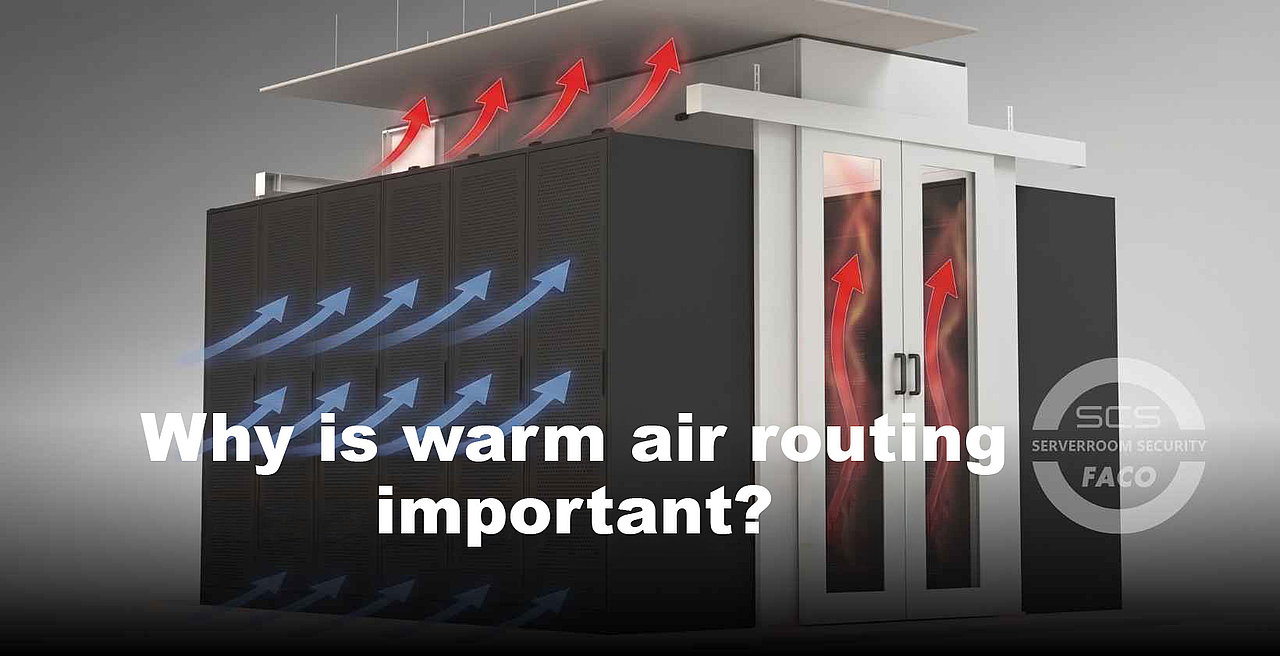
Warm air routing is an essential component of data center air conditioning with hot aisle and cold aisle systems. It ensures that the heat generated by servers and other IT components is dissipated in a controlled manner from the immediate rack area.
Consistent separation of warm exhaust air and cooled supply air improves the thermal conditions in data centers and server rooms and supports energy-efficient operation of the existing cooling technology.
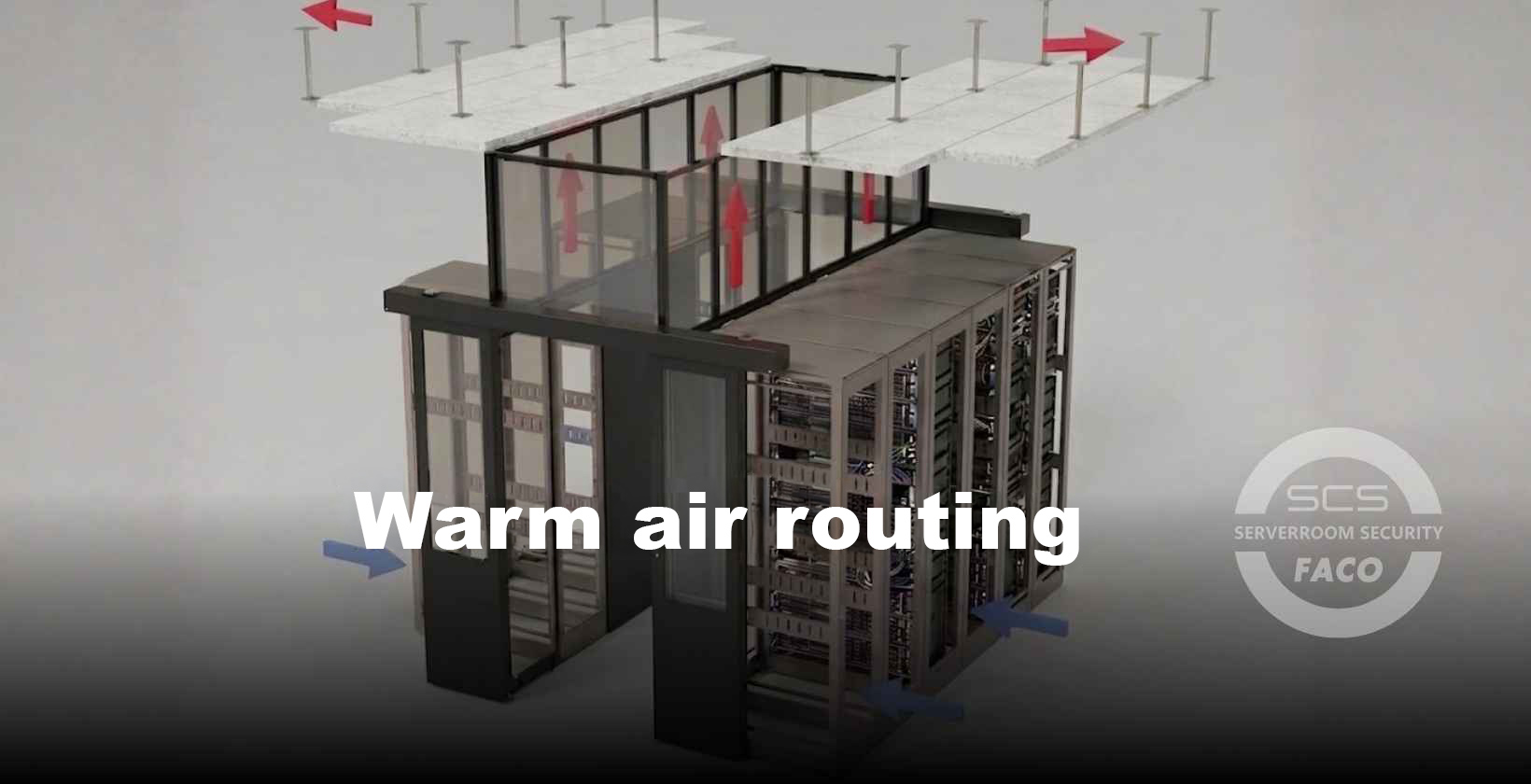
SCS FACO manufactures custom hot aisle and cold aisle containment systems precisely tailored to each data center environment. In a hot aisle containment system, warm air is routed, among other things, via HAC chimney elements. These elements direct the heated exhaust air from the enclosed hot aisle to the designated return air area, such as a suspended ceiling. From there, the air is returned to the existing CRAC or CRAH units. This ensures the necessary separation between hot and cold air.
On this page we explain why warm air routing is important in data centers and server rooms and discuss our offering in this area.
Why is warm air routing important?
Warm air routing is important in data centers and server rooms to avoid hotspots and improve energy efficiency and PUE.
The PUE (Power Usage Effectiveness) value describes the ratio between the total energy demand of a data center and the energy consumption of the IT systems operating within it. The less additional energy required for cooling, the more favorable this metric.
Proper airflow helps prevent hotspots. During normal server operation, the equipment draws in cooled air at the front. This air absorbs heat as it passes through the servers and is then expelled as warm exhaust air at the rear of the racks. Without targeted airflow, this exhaust air mixes with the incoming cool air. The mixed air then travels from the rear of a server rack back to the front, for example, through open rack units, side gaps, or other openings. Consequently, the servers draw in already warmed air again.
Air recirculation causes locally elevated inlet temperatures and promotes hotspots. If individual components exceed their intended temperature ranges, servers throttle their performance. A structured warm air routing system reduces this risk because it directs the heated exhaust air away from the rack area and keeps it away from the intake air side.
Warm air routing with the support of a hot aisle containment system ensures effective separation between cold and warm air. In a hot aisle containment system, the backs of the server racks face each other, forming the hot aisle. Doors, side panels, and a ceiling seal the hot aisle almost airtight. Therefore, the warm server exhaust air does not escape uncontrollably into the rest of the server room. It is routed, for example, via chimneys into the return air area of a suspended ceiling and then supplied to the existing cooling units.
Separating the airflows also impacts energy efficiency. Cooling units operate more efficiently when the temperature difference between the cooled supply air and the warm return air remains as large as possible. If the two airflows mix prematurely, this temperature difference decreases. With proper separation, however, the exhaust air reaches the CRAC or CRAH units with a higher return temperature. This improves the usable cooling capacity and minimizes the energy consumption of the air conditioning system as well as the PUE (Power Usage Effectiveness) of the data center.
What are the advantages of our warm air routing system?
The advantages of our warm air routing are essentially a higher possible power density in data centers, a longer hardware lifespan and an improvement in energy efficiency.
Our warm air routing system enables higher power densities of over 20 kW. Because the heat generated in the racks is dissipated in a targeted and controlled manner, even racks with power outputs exceeding 20 kW can be thermally isolated from one another. Thanks to effective warm air routing, the warm air from a high-performance rack does not uncontrollably affect the supply air to adjacent racks. This achievable high power density is particularly relevant in high-density environments where large heat loads are generated in a limited space.
Our warm air routing system enables a longer hardware lifespan. Consistent thermal conditions play a crucial role in the long-term operation of IT hardware. Frequent temperature fluctuations and mixed airflows put thermal stress on components and promote material fatigue. A stable warm air routing system contributes to a more uniform climate in the server room or data center. It helps to limit uncontrolled temperature fluctuations and localized heat pockets, thereby extending the lifespan of hardware.
Another advantage of our warm air routing system is the precise fit of the enclosure. SCS FACO manufactures the necessary components with precision using CNC machines. The design can be adapted to existing server racks, spatial conditions, and building connections. Precisely manufactured transitions and seals minimize air leaks that could allow warm exhaust air to enter the cold aisle or cooled air to enter the hot aisle unused.
The modular design provides the necessary scalability. The enclosure can be expanded as needed when additional racks are installed or existing rows are extended. This makes the solution suitable for both newly planned areas and data centers whose IT infrastructure grows gradually.
Warm air routing offers the advantage of a consistent separation of cold and warm air. This separation increases cooling efficiency and reduces the energy consumption of the existing cooling system. The usable temperature difference (ΔT) is maximized. ΔT refers to the temperature difference between the supply air and the warm return air. The less the airflows mix, the warmer the return air is when it reaches the cooling units. A high return temperature enables more efficient operation in many systems because the available cooling capacity can be utilized more effectively.
A hot aisle containment system to support warm air routing provides thermal buffer capacity. Because the area outside the contained hot aisle remains cool, in the event of an air conditioning unit failure, the entire cooled room volume acts as a temporary thermal buffer. This typically results in a longer warm-up time for the supply air drawn in by the servers. However, the actual available response time depends on the heat load, the room volume, the redundancy, and the specific cooling architecture of the data center.
A slight negative pressure within the hot aisle containment helps to prevent hotspots. This negative pressure is created when the heated exhaust air is actively routed from the hot aisle into the designated return air path. The resulting airflow follows the intended direction from the cooled front, through the servers, and into the enclosed hot aisle. This reduces the risk of heat buildup at the rear of the rack.
Warm air routing from SCS FACO
SCS FACO offers efficient warm air routing using individually manufactured hot aisle enclosures.
Our hot aisle containment systems are constructed using the HAC chimney method. The HAC (Hot Aisle Containment) structure consists of steel walls and transparent Makrolon elements. It is designed to fit the existing server racks. Depending on the available space, a freestanding solution is also possible, meaning that it is not always necessary to connect every containment directly to existing structures.
Hot aisle containment systems can be flexibly adapted to different technical and spatial requirements. These include varying rack heights and widths, different cabinet dimensions, as well as special ceiling conditions or room geometries. The goal is to achieve the most enclosed airflow possible, which integrates functionally into the existing data center environment.
The sealed design of the hot aisle containment prevents the cooled supply air from mixing prematurely with the warm server exhaust air. The heat generated by the IT systems remains in the hot aisle and is directed in a controlled manner to the designated return air area of the cooling units. This reduces unnecessary air short circuits, maintains a stable temperature difference (ΔT), and lowers the energy consumption of the existing air conditioning system.
Targeted warm air routing also helps prevent hotspots. Instead of dispersing throughout the room or flowing back towards the front of the servers, the warm air is extracted from the enclosed area. Controlled return airflow to the existing cooling units helps maintain the intended airflow direction through the server racks.
Our hot aisle containment systems are individually equipped with HAC door systems that can be adapted to specific operational requirements. We offer self-closing or manually closing sliding doors for the containment. Depending on the design, the door leaves can move independently or synchronously. Windows made of safety glass or Makrolon allow for viewing into the hot aisle without having to open the containment for visual inspection. The specific design depends on the available space, security requirements, and operational processes in the data center.
For which data centers is our warm air routing suitable?
Warm air routing using aisle enclosures is suitable for, among other things, colocation data centers, high-density data centers, data centers with critical infrastructure requirements, and existing data centers.
The individual and modular manufacturing allows the design to be adapted to both standardized rack series and heterogeneous infrastructures.
In colocation data centers, separating hot and cold air improves energy efficiency and thus contributes to lower operating costs. Since such data centers often use server racks from different customers, manufacturers, and of varying sizes, a customizable enclosure is particularly important. Different rack heights and widths can be accommodated during the planning and manufacturing process.
High-density data centers benefit from targeted and controlled warm air routing because large amounts of heat are generated in a confined space. Hot aisle containment prevents exhaust air from heavily loaded racks from affecting adjacent systems or flowing back towards the supply air side. This allows for better integration of high power densities into the existing air distribution concept.
Optimized warm air routing can be implemented in existing data centers. Modularly manufactured aisle enclosures can be adapted to existing rack rows and spatial conditions. The modular design facilitates retrofitting and allows for future expansions when additional server racks are installed or existing areas are modified.
For data centers with critical infrastructure (KRITIS) requirements, a traceable, stable, and energy-efficient operating environment with targeted warm air routing is of particular importance. Hot aisle containment improves thermal operating conditions and supports energy efficiency initiatives as well as compliance with organizational and technical requirements. The specific requirements depend on the individual operator, application area, and regulatory framework.
More
Doors or curtains for cold / hot aisles?
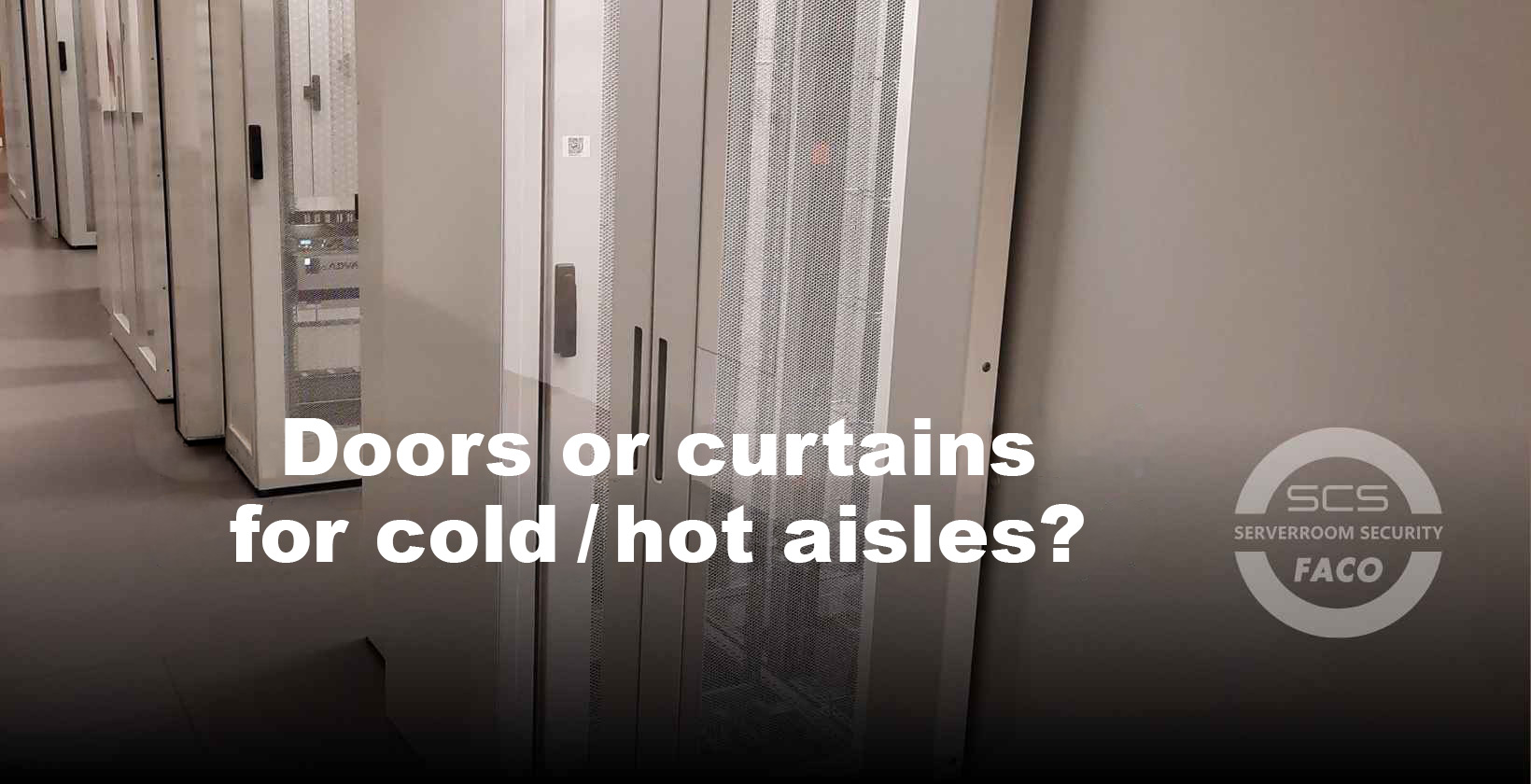
Whether doors or a curtain are more suitable for the cold aisle / hot aisle depends on the individual room conditions and framework within the server room.
Panels for aisle containment systems from SCS FACO
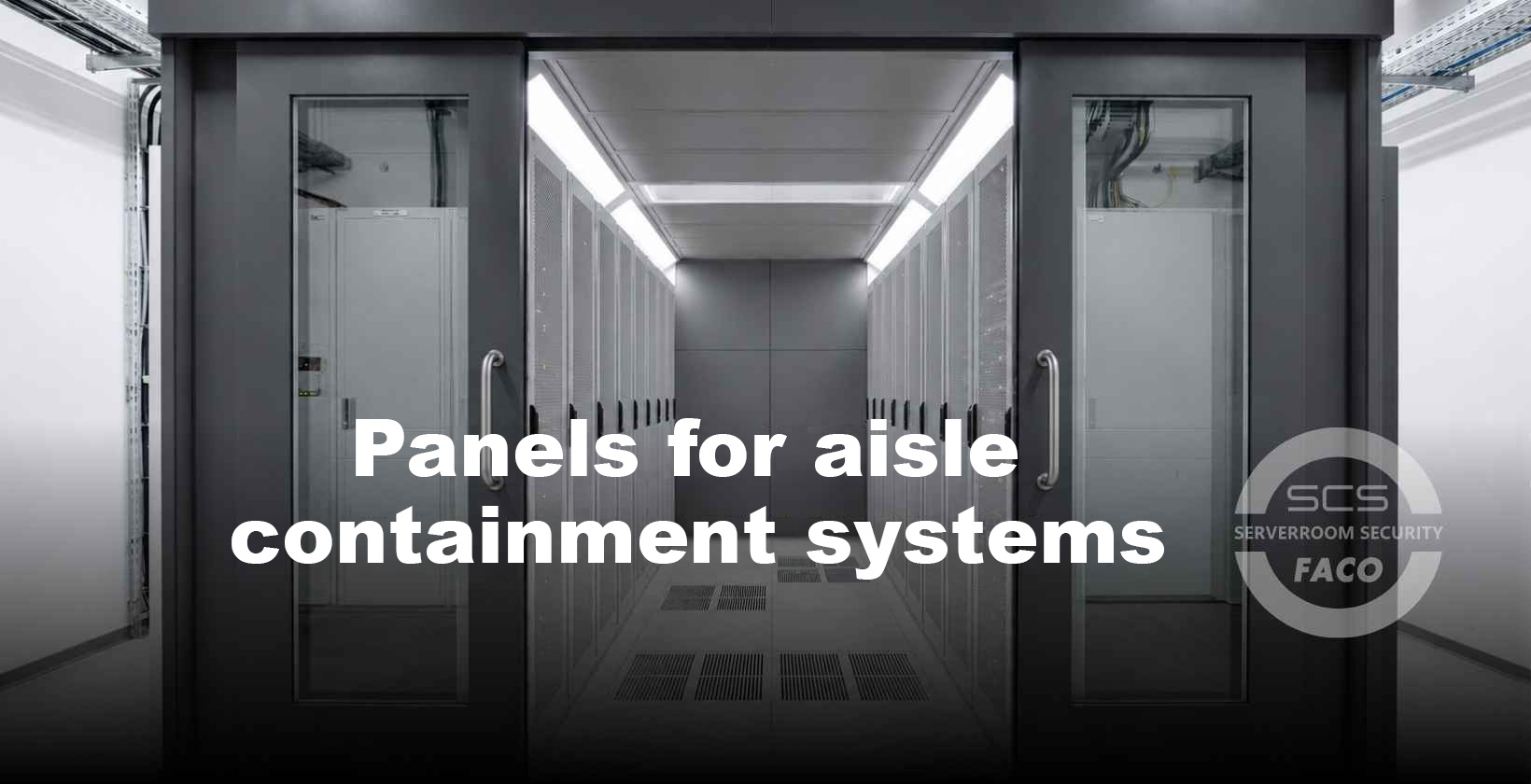
SCS FACO's aisle containment panels are modular in design and can be individually adapted to existing or planned rack systems.

Airflow management systems | SCS FACO
Airflow management systems are metal elements specifically designed for airflow, supporting HVAC systems in data centers in regulating the required indoor climate as efficiently and consistently as possible.