
 10Aug
10AugAirflow management systems | SCS FACO
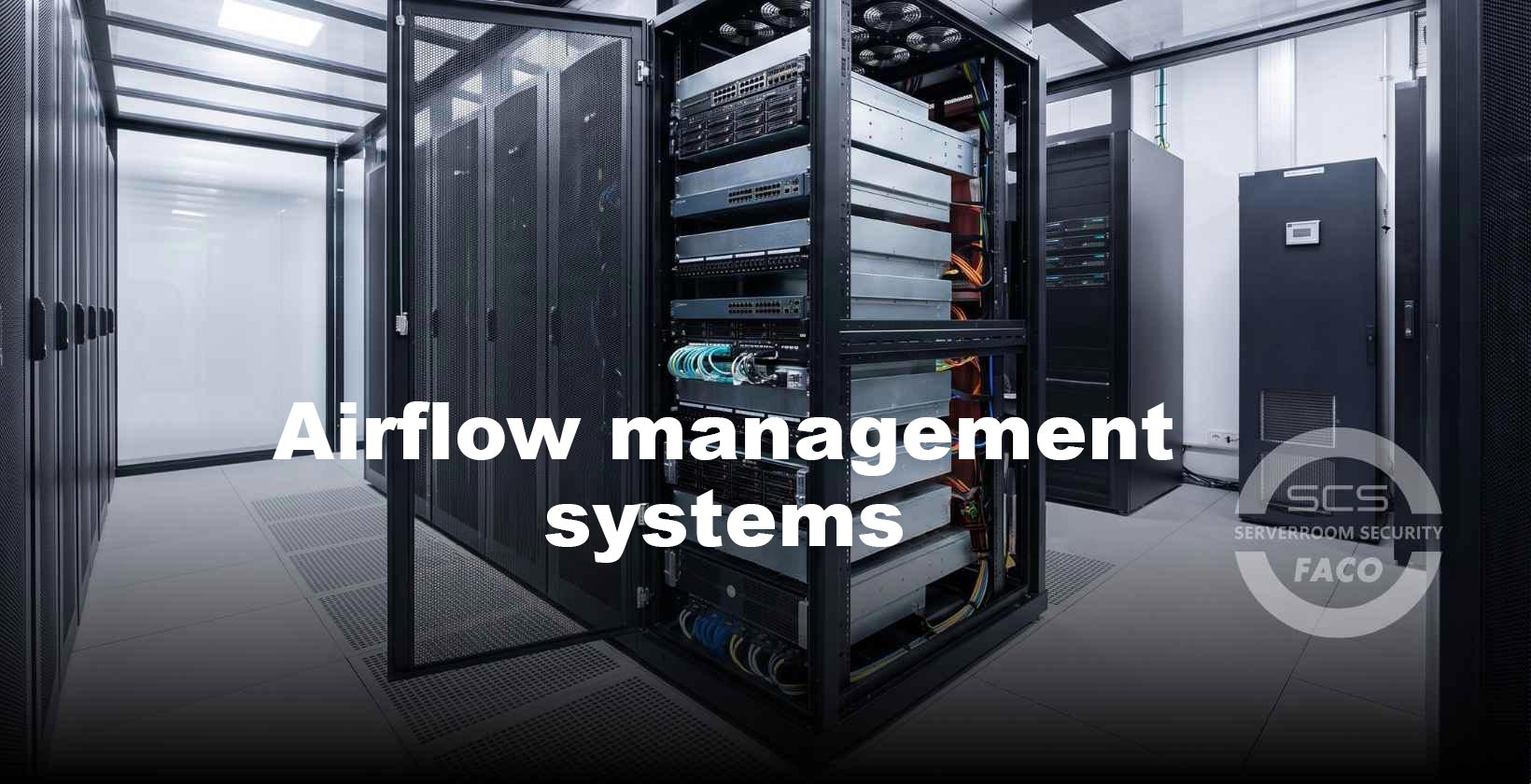
Airflow management systems are metal elements specifically designed for airflow, supporting HVAC systems in data centers in regulating the required indoor climate as efficiently and consistently as possible. Their primary purpose is to consistently separate cold supply air from warm server exhaust air. This separation ensures that the cooled air is directed to the intake sides of the IT hardware, while the resulting waste heat is removed in a controlled manner.
The most important airflow systems in a data center are cold aisle containment and hot aisle containment. Both optimize airflow, reduce thermal short circuits, and minimize the risk of local hotspots. They improve cooling energy efficiency and contribute to lower operating costs.
SCS FACO offers high-quality hot and cold aisle containment systems for all types of data centers. Our systems are modular and can be adapted to individual room layouts and changing requirements.
Cold aisle containment systems are particularly suitable for existing buildings if a raised floor for cold air supply is present or can be retrofitted. Hot aisle containment systems are primarily an option for new buildings and high-density data centers, where the dissipation of high heat loads can be considered during the initial room planning.
Below we describe the most important types and advantages of airflow management systems and discuss our offering in this area.
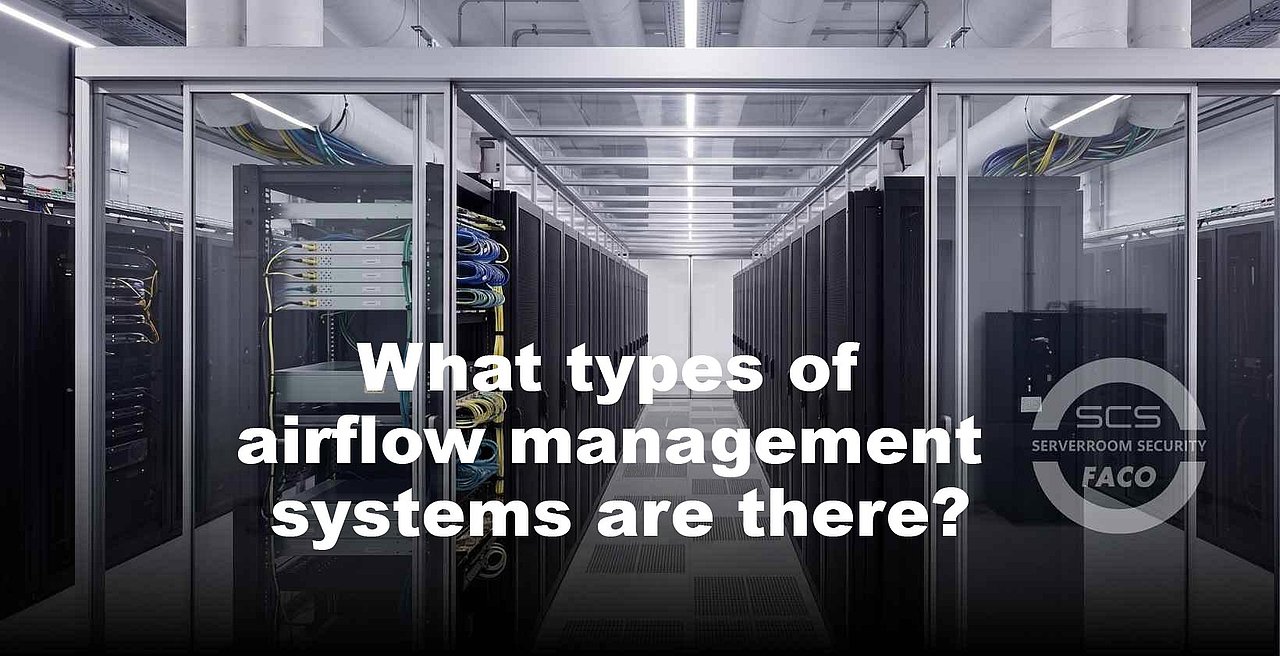
What types of airflow management systems are there?
There are different types of airflow management systems in server rooms. The most important airflow management systems are cold aisle containment and hot aisle containment.
The hot and cold aisle containment systems are complemented by air deflectors, blanking panels, and brush strips that seal open areas within the server racks or at cable penetrations. Together, these components ensure that cold and warm air do not circulate uncontrollably or mix prematurely.
Without separating the cold and warm air, already heated exhaust air is recirculated to the front of the servers. This increases the intake temperature of the hardware, while air conditioning units require more energy to maintain the necessary operating conditions. A well-designed enclosure prevents these thermal short circuits and improves the predictable distribution of cooling air.
The fundamental goal of cold and hot aisle containment systems is identical: to strictly separate cold supply air and warm exhaust air. The crucial difference lies in the area being contained. In a cold aisle containment system, the cooled air remains within the enclosed aisle. In contrast, a hot aisle containment system captures the hot server exhaust air and recirculates it in a controlled manner back to the cooling units.
In the following sections, we describe in detail how cold and hot aisle containment systems work.
Cold aisle containment
A cold aisle containment (CAC) traps the cold air within a passageway.
In a cold aisle containment system, two opposing rows of racks are arranged so that their fronts face each other. The space between them forms the cold aisle. A cold aisle roof, entrance doors, and metal panels separate the cold aisle from the rest of the server room.
In a cold aisle containment system, cooled air is supplied via a raised floor. Air-permeable floor panels direct it into the contained aisle, where it is distributed as needed. Depending on the design, integrated fans can assist with distribution. The servers draw in the cold air through their rack fronts. It then flows through the equipment, absorbs the heat generated, and exits through the rear of the servers.
In a cold aisle containment system, the heated exhaust air enters the unenclosed area of the server room. It is crucial that this heated air does not flow back into the cold aisle and raise the intake temperature there. Closed roof and door elements, along with appropriately installed panels, minimize this unwanted mixing. To ensure the separation remains effective, any unused rack units and unsealed cable openings must be sealed.
Cold aisle containment systems can be easily integrated into existing server rooms. They are particularly useful when a raised floor is already in place, allowing for reliable cold air supply. Since no special ceiling system is required to capture warm exhaust air, cold aisle containment systems are often suitable for retrofit projects and existing data centers.
One disadvantage of cold aisle containment is that the unenclosed areas heat up. Outside the cold aisle, temperatures of approximately 30 to 35°C are possible, depending on the load and system design. High temperatures between 30 and 35°C affect working conditions for personnel and must be considered during operational planning.
Hot aisle containmant
In a hot aisle containment (HAC), the warm exhaust air from the servers is enclosed in the hot aisle.
In hot aisle containment systems, the racks are arranged in rows with their backs facing each other. The aisle between the server racks absorbs the waste heat and is separated from the rest of the server room by a HAC roof system, doors, and metal panels.
The servers draw in cooled room air at their front. After the cool air has passed through the hardware, it is discharged through the rear of the racks into the enclosed hot aisle. From there, the warm air is drawn in or routed via a dedicated duct. A double ceiling then directs the exhaust air in a controlled manner to the cooling units. Depending on the system design, the warm air is recirculated, for example, to CRAC or CRAH systems.
Because the hot exhaust air is contained within the hot aisle, it reaches the heat exchangers with a high and consistent return temperature. This high and consistent return temperature increases the efficiency of the heat exchangers because cold and warm air do not mix unnecessarily on their way there. The open area of the server room remains cool, as the waste heat is contained within the hot aisle.
Hot aisle containment systems require suitable structural infrastructure for exhaust air management. Especially in new buildings, a double ceiling can be planned from the outset. The double ceiling is precisely tailored to the heat loads of the data center during the planning phase. Due to the planning effort involved, hot aisle containment systems are particularly suitable for new data centers and high-density environments with powerful servers and correspondingly high heat output.
A practical advantage of hot aisle containment is that the open server room remains pleasantly cool. This makes it easier for personnel to stay outside the enclosed hot aisle. In the event of an air conditioning failure, the larger volume of cold air in the server room acts as a thermal buffer. This does not prevent the servers from overheating, but it does slow the process compared to a much more confined volume of cold air. Preventing overheating is one of the advantages of airflow management systems, which we will describe in the following section.
What are the advantages of airflow management systems?
Airflow management systems offer the advantages of supporting a controlled indoor climate, structuring airflow within the data center, and reducing thermal short circuits. The consistent separation of warm and cold air improves the supply of cooling air to the hardware and enables efficient removal of heat generated by the server racks.
A key advantage of air distribution systems is optimized airflow. Cooled air is not distributed uncontrollably throughout the room, but rather directed precisely to the front of the server racks. Exhaust air is collected on the warm side or kept away from the cold aisle. Air deflectors and blanking panels close off unused rack units, ensuring that air flows primarily through the installed hardware and not through unused rack space.
Airflow management systems help prevent hotspots by ensuring even distribution of cool air. Localized overheating occurs when warm air accumulates in front of individual servers or when already heated exhaust air is drawn back in. Clear airflow reduces the risk of hotspots and makes it easier to maintain consistent conditions at the intake sides of the equipment.
Another advantage of airflow management systems in data centers is improved energy efficiency. When cold and warm air don't mix, air conditioning systems can supply less unnecessarily cooled air. With targeted cold air distribution, higher supply temperatures can be achieved, provided the technical and operational conditions allow it. This targeted cold air distribution enables more demand-oriented cooling while maintaining the permissible temperatures of the IT components.
Improved energy efficiency through high-quality airflow management systems in data centers contributes to significant cost savings. Since cooling accounts for a substantial portion of the energy consumption of many data centers, optimized airflow can reduce energy consumption and ongoing operating costs. The actual savings depend on factors such as the existing infrastructure, the IT load, the airtightness of the enclosure, and the cooling concept employed.
This efficiency improvement through targeted airflow management systems helps to optimize the data center's PUE (Power Usage Effectiveness). PUE describes the ratio between a data center's total energy consumption and the energy requirements of its actual IT systems. The less additional energy is needed for cooling, among other things, the closer the PUE value is to the theoretical ideal of 1.0.
Air quality and the stability of the indoor climate conditions benefit from controlled airflow. Waste heat is efficiently removed, while temperature and humidity are more easily maintained at a constant level. Airflow management systems thus contribute to suitable operating conditions for the installed hardware and to predictable data center operations.
Airflow management systems from SCS FACO
SCS FACO offers airflow management systems that are individually designed to meet the specific requirements of server rooms and data centers. Our product range includes cold aisle containment, hot aisle containment, and functional components such as blanking panels and brush strips. The modular design allows for adaptation to different rack configurations, room heights, structural features, and future changes to the IT infrastructure.
SCS FACO's cold aisle containment systems consist of precision-manufactured components. These components are produced on CNC machines, allowing for perfectly tailored solutions to suit specific room conditions. The CAC roof systems are made of Exolon. Depending on the configuration, the doors are available in self-closing or manually closing versions, as well as with free-running or synchronized operation.
Powder-coated steel is used for the panels of our enclosures. The color of the metal surfaces is customizable and can be matched, for example, to the color of existing server racks. Thanks to the modular design, the cold aisle containments can be adapted or expanded to meet changing requirements.
Our hot aisle containment systems are based on robust materials such as steel and Exolon. The CNC-machined components allow for precise configuration to suit various spatial requirements. Doors are available in manual or self-closing versions, as well as with free-running or synchronized operation. Custom color schemes can be tailored to match server racks or the overall design concept of the data center.
Blanking panels are an important component of effective airflow. These closed panels cover unused rack units and prevent air from flowing through open areas. Sealing gaps with blanking panels reduces the risk of a server drawing in warm air from its rear through the front. Cable entry points can be further sealed with brush strips. These brush strips facilitate cable management while limiting unwanted air leakage between cold and warm areas.
When are which airflow management systems suitable?
Airflow management systems such as cold aisle containment are suitable for existing buildings and where there is no suspended ceiling, while hot aisle containment is suitable for new buildings and high-density data centers.
Cold aisle containment is a typical retrofit solution for server rooms. Installing a cold aisle containment system is possible in many existing server rooms and data centers with manageable construction effort. If a raised floor is already present in the server room, the cold air can be routed directly through it into the contained aisle. Retrofitting a suitable raised floor system is easily accomplished in most server rooms. A special ceiling system for warm air exhaust is not required for cold aisle containment, as the warm exhaust air is distributed throughout the rest of the server room and then recirculated for cooling.
Cold aisle containment systems are only suitable if an adequate, clearly defined operational and contingency plan is in place. In the event of an air conditioning failure, cold aisle containment systems offer only limited cooling reserves. The available volume of cold air is essentially confined to the contained aisle. Once this air volume has been warmed by the servers, the intake temperatures rise rapidly.
Hot aisle containment systems are particularly suitable for new buildings because a double ceiling for the controlled removal of warm exhaust air can be directly incorporated into the design. Hot aisle containment is ideal for high-density data centers where high heat loads are generated in a small area. The hot server exhaust air is immediately contained within the hot aisle and directed to the cooling units. This targeted airflow allows the heat exchangers to achieve a higher return temperature and operate more efficiently.
Blanking panels and brush strips are suitable for optimizing airflow systems. Blanking panels close off unused rack units and prevent heated air from flowing back towards the intake side through open areas. Cable routing openings should be sealed with brush strips to minimize cooling air loss.
The decision between cold aisle containment and hot aisle containment must always be based on the structural conditions, the existing airflow, the expected heat loads, and potential expansion plans. With modular airflow management systems from SCS FACO, cold or hot aisles can be enclosed to suit the specific room conditions and adapted as needed for future changes to the data center structure.
More
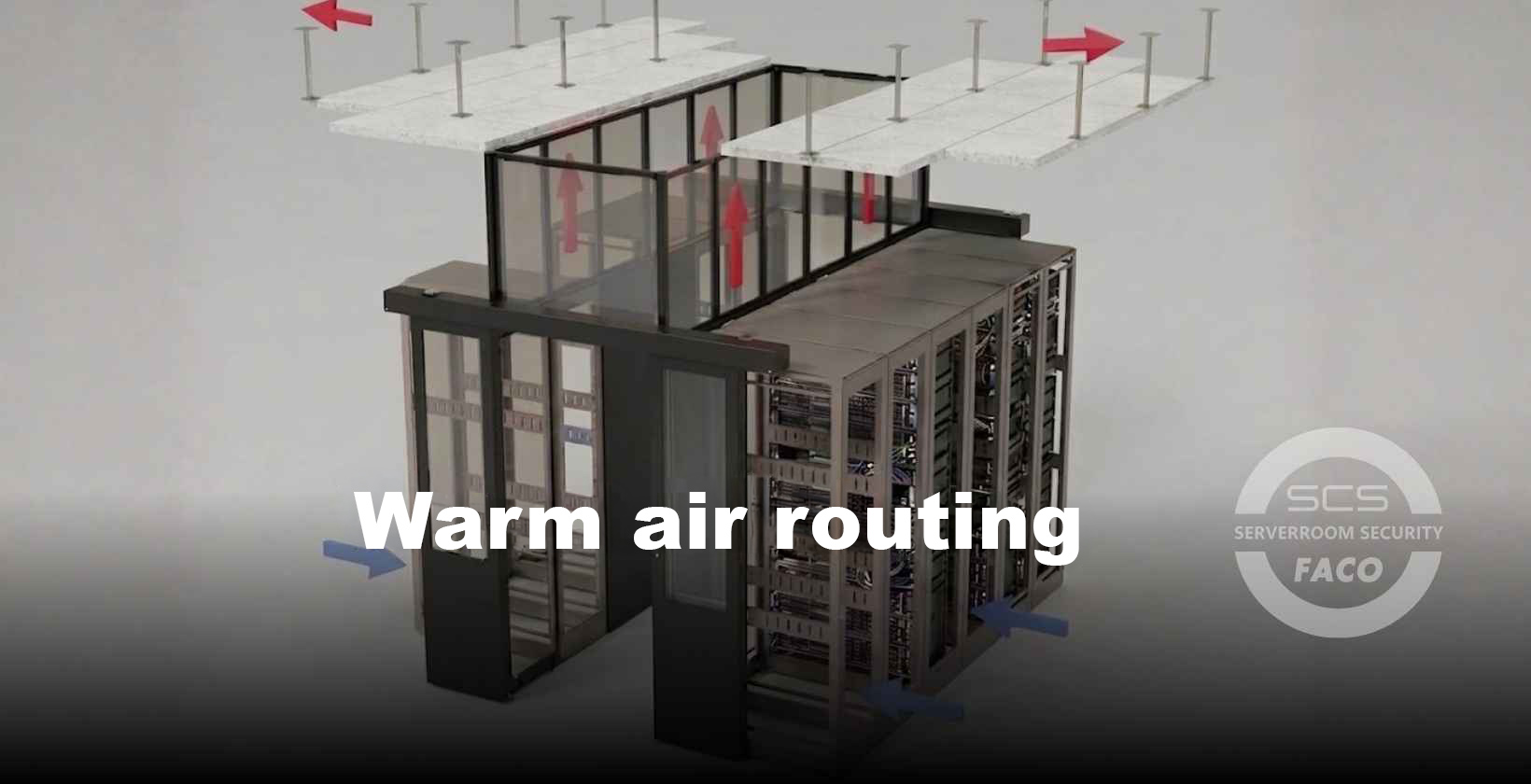
Warm air routing from SCS FACO
Warm air routing is an essential component of data center air conditioning with hot aisle and cold aisle systems. It ensures that the heat generated by servers and other IT components is dissipated in a controlled manner from the immediate rack area.
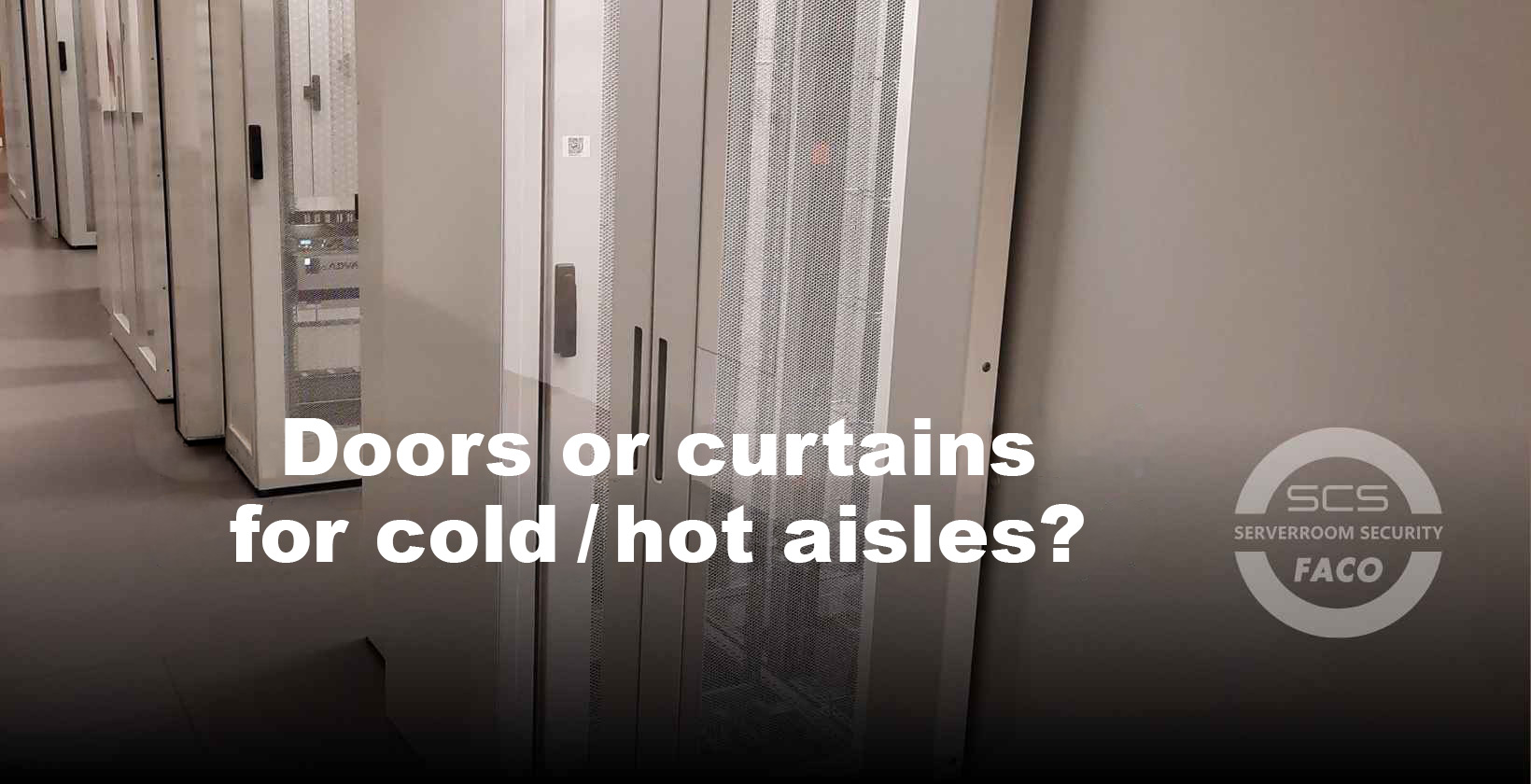
Doors or curtains for cold / hot aisles?
Whether doors or a curtain are more suitable for the cold aisle / hot aisle depends on the individual room conditions and framework within the server room.
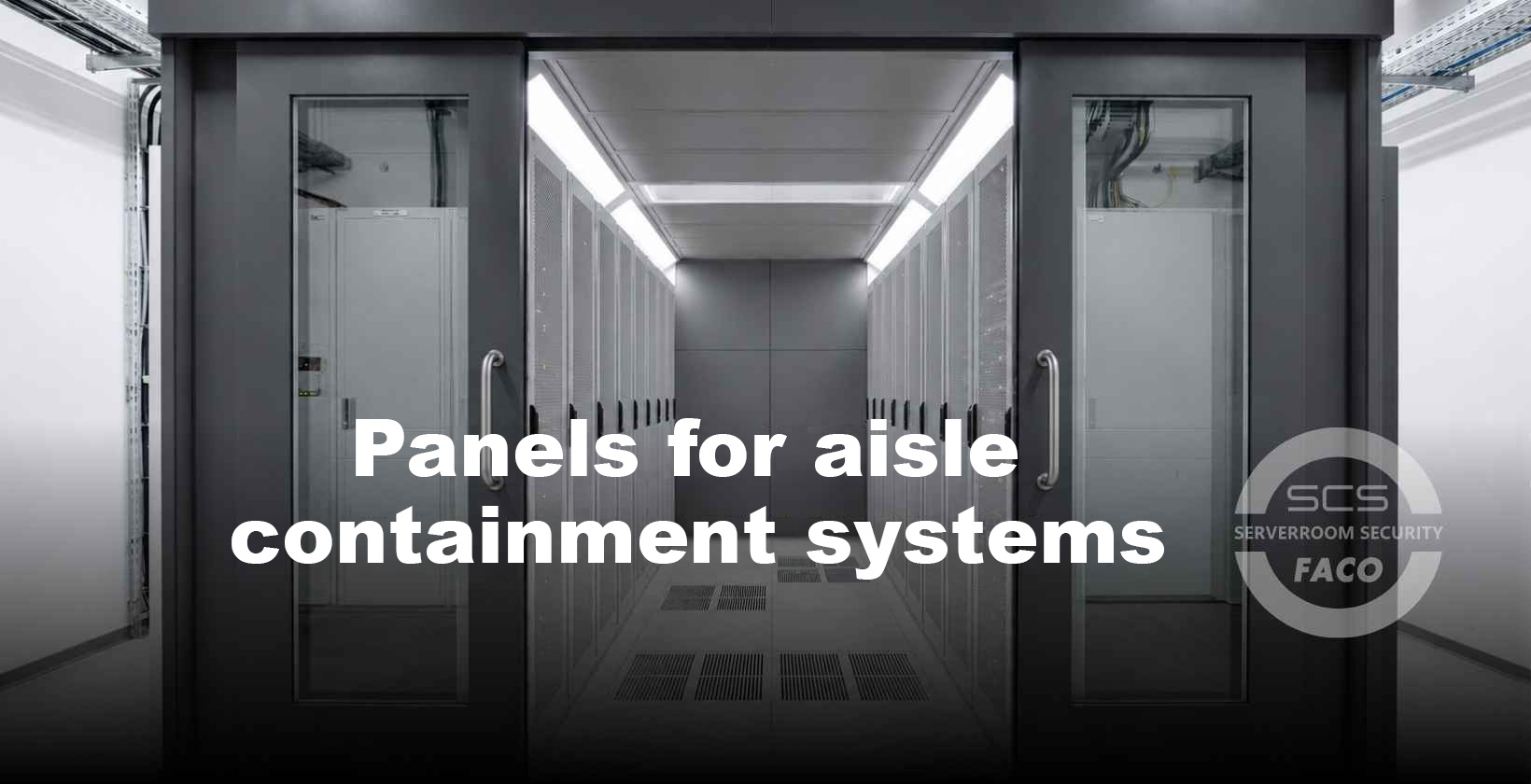
Panels for aisle containment systems from SCS FACO
SCS FACO's aisle containment panels are modular in design and can be individually adapted to existing or planned rack systems.