
 27Aug
27AugDoors or curtains for cold / hot aisles?
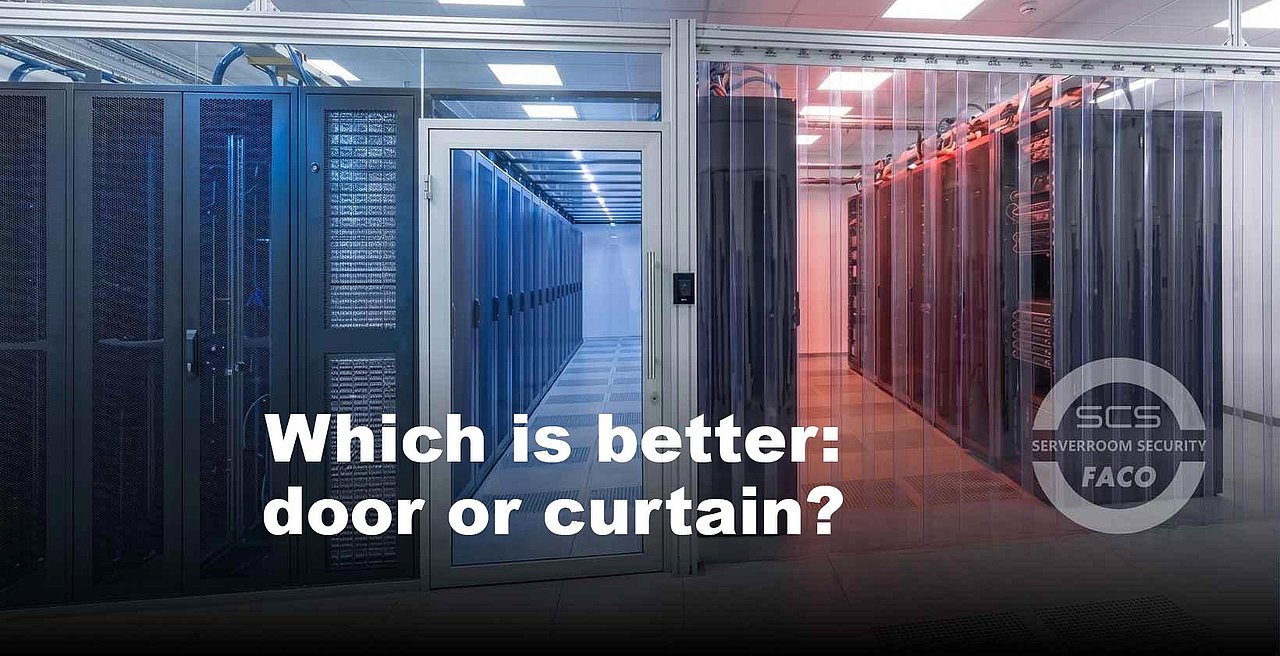
Whether doors or a curtain are more suitable for the cold aisle / hot aisle depends on the individual room conditions and framework within the server room.
Effective cold aisle or hot aisle containment prevents cold supply air and warm exhaust air from mixing in the server room. For reliable thermal separation, not only the roof and side panels, but also the access points to the contained aisle must be properly designed.
Doors offer improved airtightness, enhanced security, and better conditions for controlled access. They can be integrated into fire protection concepts and, if necessary, into fire alarm systems. Curtains are a cost-effective and flexible solution, particularly suitable for small server rooms, retrofitted enclosures, and temporary installations.
Whether a door or a curtain is the better choice in the server room depends on the duration of use, the available budget, the spatial conditions and the requirements for energy efficiency, access control and fire protection.
On this page we explain the biggest advantages and disadvantages of doors and curtains for cold and hot aisles and describe our range of products in this area.
Which is better: a door or a curtain for a cold aisle / a hot aisle?
Whether a door or a curtain is better for the cold aisle/hot aisle depends on the individual priorities and operational requirements for the server room. In particular, the desired airtightness, the necessary security, the fire protection concept, the planned service life, and the investment options must be taken into account.
For professional IT environments, a door is usually the more suitable long-term solution compared to a curtain. This is especially true for data centers, continuously operating server rooms, and IT infrastructures with stringent security requirements. Thanks to its robust construction and appropriate seals, cold and warm airflows can be efficiently separated. Electronic access control systems can also be integrated into the door. The higher initial investment is offset by a longer lifespan and lower cooling-related operating costs.
In HPC environments, a door is generally preferable to a curtain. High-performance computing systems generate high heat loads and therefore place correspondingly high demands on controlled airflow. The tightest possible separation of cold and warm air reduces airflow short circuits and supports the efficient operation of the existing cooling infrastructure. A robust door also increases the physical security of the enclosed area.
A vertical blind is particularly suitable as a low-budget solution. It has low purchase costs and can be flexibly adapted to different aisle heights and widths. Therefore, in small server rooms where fixed installations are difficult to implement due to spatial constraints, a blind is a practical alternative.
For temporary server room solutions, a strip curtain is ideally suited. If an enclosure is only needed for a few months, or if a temporary solution is required, a permanently installed door system may be economically disproportionate. In such cases, the curtain allows for quick and adaptable partitioning. For permanent use, the reduced airtightness, lack of access control, and higher operating costs must be considered. Access control, airtightness, and operating costs are important factors when weighing the advantages and disadvantages of doors and curtains for cold and hot aisles.
What are the advantages and disadvantages of doors for cold aisle/hot aisle?
The advantages of doors for cold or hot aisles are mainly their high tightness, efficiency, better access control, low operating costs, possible integration into the fire alarm system, and the durability of the metal construction.
The advantages of doors for aisle containment are offset by higher investment costs, less flexibility in structural changes and an additional space requirement.
| Advantages | Disadvantages |
| Sealing | high investment costs |
| high efficiency | low flexibility |
| Access control | Space requirements |
| lower operating costs | |
| Connection to fire alarm system (FAS) | |
| longevity |
Advantages of doors for aisle containment
Advantages of doors for aisle containment include improved cooling efficiency and low operating costs due to their tightness, as well as high durability.
A key advantage of doors for aisle containment is their airtightness. Brush seals and precisely fitted transitions reduce the amount of air that escapes uncontrollably from the enclosed aisle. This limits the mixing of cold supply air and warm exhaust air. Such thermal separation improves the conditions for energy-efficient operation of the server room.
The high efficiency of a door solution for aisle containment systems results from the near-airtight separation of the cold or hot aisle. By reducing air short circuits and unwanted mixing airflows, less already cooled air needs to be recirculated. This positively impacts the Power Usage Effectiveness (PUE). PUE describes the ratio of a data center's total energy consumption to the energy consumption of the IT systems it uses. The actual effect depends on the overall containment design and the existing technical infrastructure.
Another advantage of doors for aisle containment is access control. Electronic access systems can be directly integrated into a suitable door. Depending on the security concept, card readers or biometric systems, for example, are possible. In this way, not only the server room but also a specific enclosed corridor can be protected from unauthorized access. For professional IT infrastructures with high physical security requirements, access control is a significant advantage over a freely passable strip curtain.
Doors for aisle containment can be connected to the fire alarm system. A connection to the fire alarm system ensures, for example, that the doors open automatically in the event of an alarm. However, the specific function must always be coordinated with the building-specific fire protection concept, the extinguishing technology used, and the applicable regulations. Materials such as metal and safety glass further improve the fire protection properties. Compared to ordinary plastic slats, metal profiles and safety glass are robust and flame-retardant or non-combustible. Safety glass also offers resistance to mechanical impacts while still allowing a view into the aisle.
Aisle doors contribute to lower operating costs by strictly separating cold and warm air. The less cooled air escapes uncontrollably or mixes with warm exhaust air, the lower the avoidable cooling losses. Therefore, the higher initial costs should not be considered in isolation, but rather in conjunction with energy consumption over the planned service life.
Another advantage of aisle containment doors is their durability. A high-quality metal door can be used for several years without showing significant signs of wear. It is designed for regular opening and closing cycles and, with a suitable construction, remains dimensionally stable even under the elevated temperatures of a hot aisle.
Disadvantages of doors for aisle containment
The biggest disadvantages of doors for aisle containment are their high investment costs and their low flexibility.
The most significant disadvantage of a door solution for aisle containment is the higher investment cost. Constructions made of aluminum or steel, along with safety glass, guide rails, seals, and optional access control components, make the purchase more expensive than a simple slat curtain. For very limited budgets or short-term use, this investment may be disproportionate.
Doors are less flexible than curtains for enclosures. Changes in aisle width usually require adjustments or modifications to the frame. A vertical blind, on the other hand, is easier to shorten, extend, or reposition. In IT environments where the spatial structure is frequently altered, this is a significant difference compared to doors.
Another disadvantage of doors is, in many cases, their space requirement. Hinged doors need sufficient free movement space in or in front of the aisle. They must not obstruct escape routes, traffic routes, or access to the racks. Sliding doors, while not requiring a swing area, do need lateral space along the racks or within the designated frame. Therefore, the choice of door type depends crucially on the spatial conditions.
What are the advantages and disadvantages of a curtain for the cold aisle/hot aisle?
The advantages of a cold aisle/hot aisle curtain are its low purchase price and high flexibility, while the disadvantages lie primarily in the poorer sealing and the higher fire risk.
| Advantages | Disadvantages |
| low acquisition costs | inferior sealing |
| flexibility | Lack of access control |
| Perfect fit | Fire safety risk |
| Retrofitting capability | higher operating costs |
| short lifespan |
Advantages of a curtain for aisle containment
The advantages of a curtain for aisle containment are low purchase costs, high flexibility and a precise fit.
The low purchase price is a major advantage of vertical blinds. With a limited budget, they offer a basic way to separate cold and warm air without having to invest in a permanently installed metal and glass structure. This makes them particularly suitable for simple or temporary enclosures.
Another advantage is its flexibility. The individual slats can be easily slid to the side for maintenance work. The aisle remains directly accessible without having to open a fixed door. This is particularly helpful in cramped server rooms where space for movement is limited.
The precise fit of curtains for aisle containment is a practical advantage. The slats can be cut to the required length and adjusted to different ceiling heights. This even makes it possible to partition off areas whose dimensions do not match standard door elements.
Another advantage of a curtain for an enclosure is its ease of retrofitting. A curtain can often be mounted to a suitable ceiling structure without complex metalwork. This makes it possible to add a simple access partition to an existing rack setup relatively quickly. It is advisable to check beforehand whether the existing ceiling is suitable for mounting.
Disadvantages of a curtain for aisle containment
Disadvantages of using curtains for aisle containment include the lack of access control, poorer sealing, higher fire safety risk, higher operating costs and a shorter lifespan compared to doors.
The biggest functional disadvantage of a curtain for aisle containment is the poor seal. Although the flexible slats overlap, they are moved by drafts and push apart. This allows air to escape from the enclosed corridor, and cold and warm air mix. Compared to a door with appropriate brush seals, the thermal separation is therefore less effective.
A strip curtain for a corridor enclosure does not provide effective access control. It can be passed through without a key, access card, or other authentication and does not protect the enclosed area from unauthorized access. For professional IT infrastructures and security-critical areas, this lack of access control is a significant disadvantage.
Another disadvantage of curtains for enclosures is their poor fire protection. PVC strips become brittle with age. In the event of a fire, the material melts or burns, releasing harmful fumes. Therefore, the suitability of a curtain must always be assessed based on the material classification and the specific fire protection concept for the building.
Due to the curtain's lower density, operating costs may be higher. Cooling loss increases as more cooled air escapes and mixes with warm exhaust air. Therefore, the initial cost advantage of the purchase must be weighed against the ongoing expenses over the entire service life.
Vertical blinds generally have a shorter lifespan than metal doors. Repeated passage through them, mechanical stress, temperature fluctuations, and the aging of the plastic all affect the slats. For permanently used aisle containment, a durable door is therefore often more economical.
Doors for aisle containment from SCS FACO
SCS FACO's aisle containment doors are modular and can be individually adapted to different data center environments. Depending on the structural requirements, flat guide rails are used or the guide elements are integrated into the frame. This allows trolleys to move through the door largely unimpeded, facilitating access for operational processes and maintenance work.
A mechanical soft-close mechanism ensures that the door gently latches and closes reliably. This mechanism is crucial for thermal insulation. If the door is accidentally left partially open, the mechanism assists in closing it automatically, thus limiting uncontrolled air exchange between the enclosed passageway and the surrounding environment.
High-quality metal profiles ensure a stable construction. They are designed to withstand the elevated temperatures of a hot aisle without warping. Windows made of impact-resistant safety glass allow a view into the aisle and meet high standards for robustness and material properties, as the glass is non-combustible.
Depending on the security concept, our doors can be integrated into electronic or biometric access control systems. This makes our doors particularly suitable for professional IT infrastructures, HPC environments, and other areas where physical access security is just as important as efficient air separation.
More
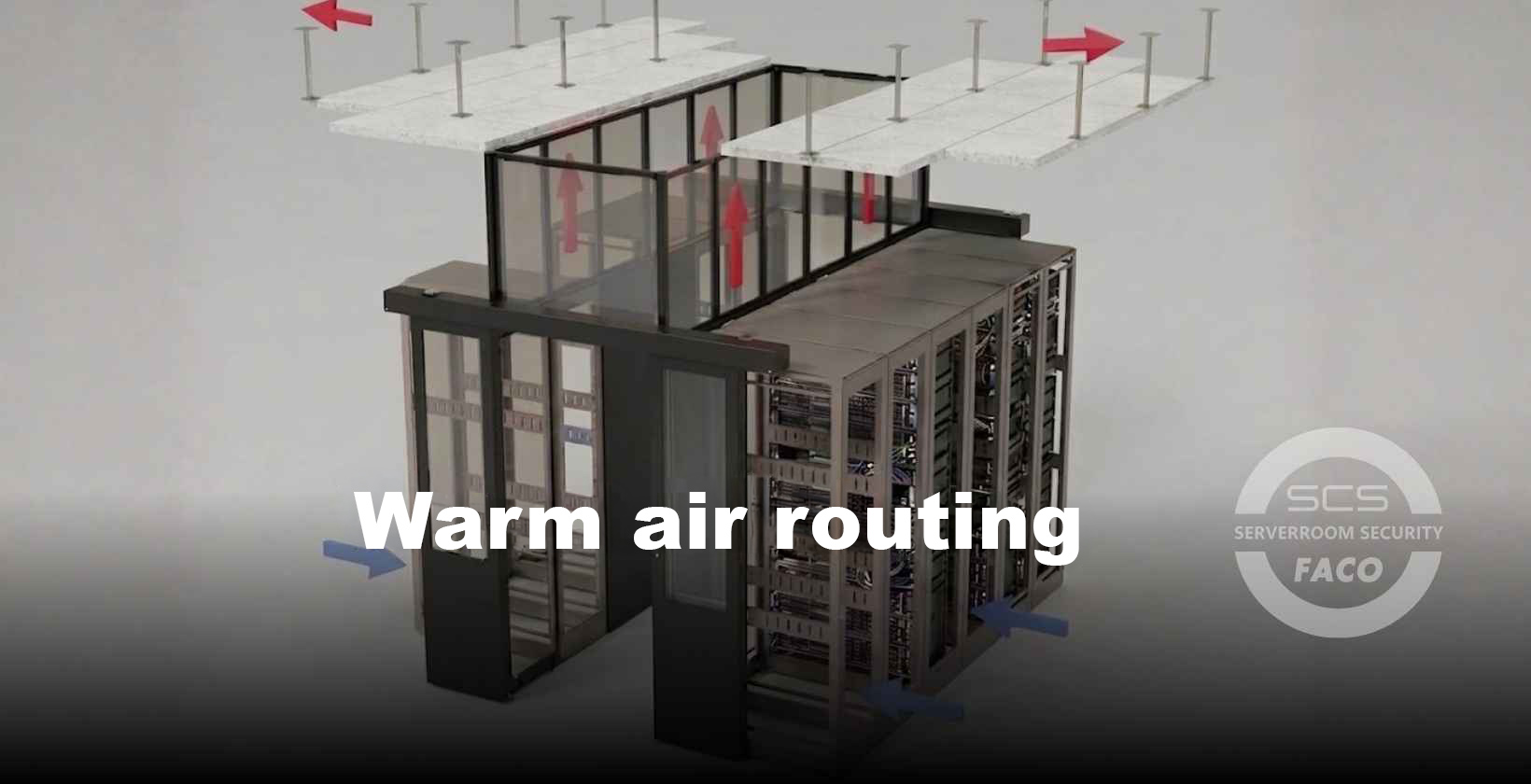
Warm air routing from SCS FACO
Warm air routing is an essential component of data center air conditioning with hot aisle and cold aisle systems. It ensures that the heat generated by servers and other IT components is dissipated in a controlled manner from the immediate rack area.
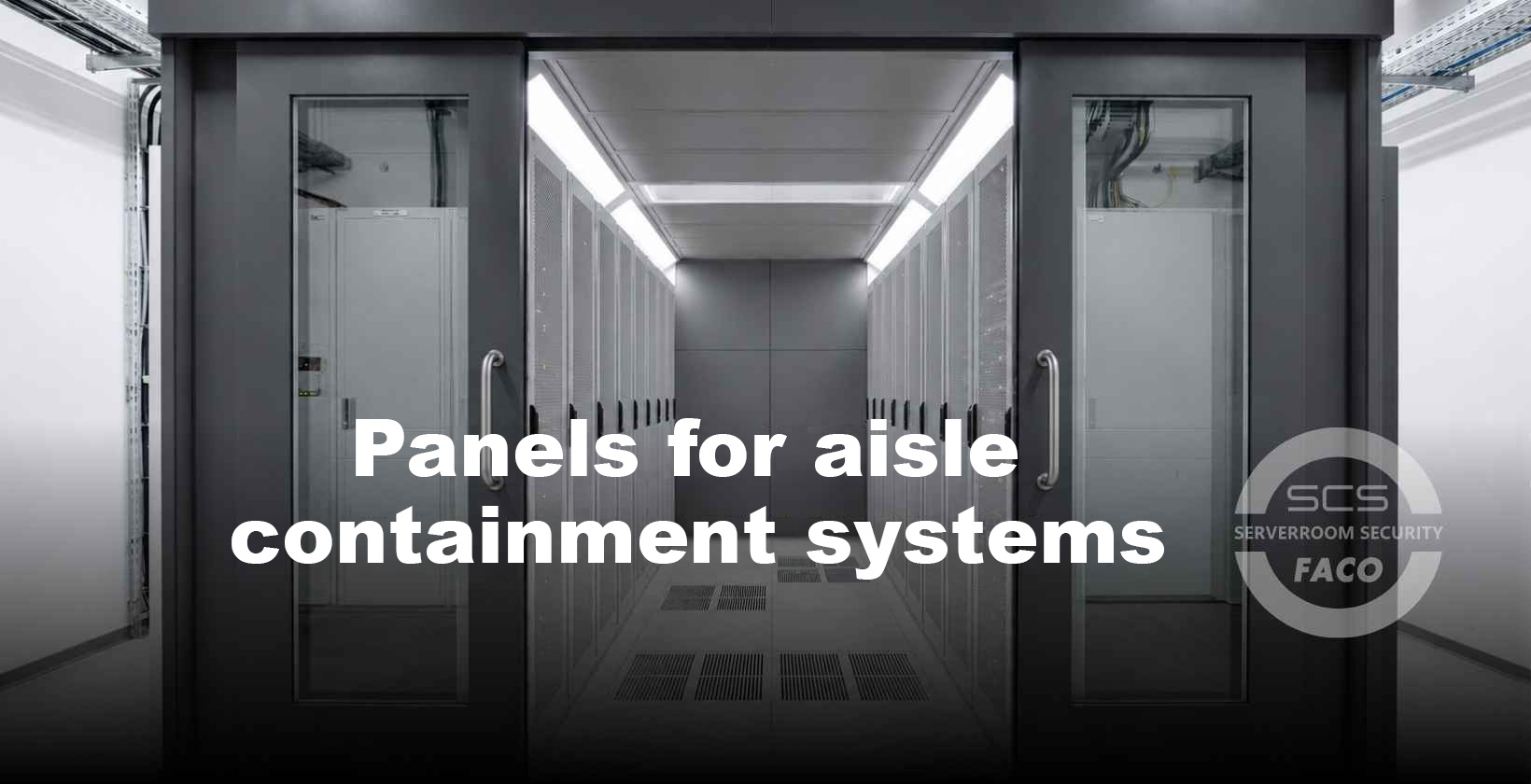
Panels for aisle containment systems from SCS FACO
SCS FACO's aisle containment panels are modular in design and can be individually adapted to existing or planned rack systems.
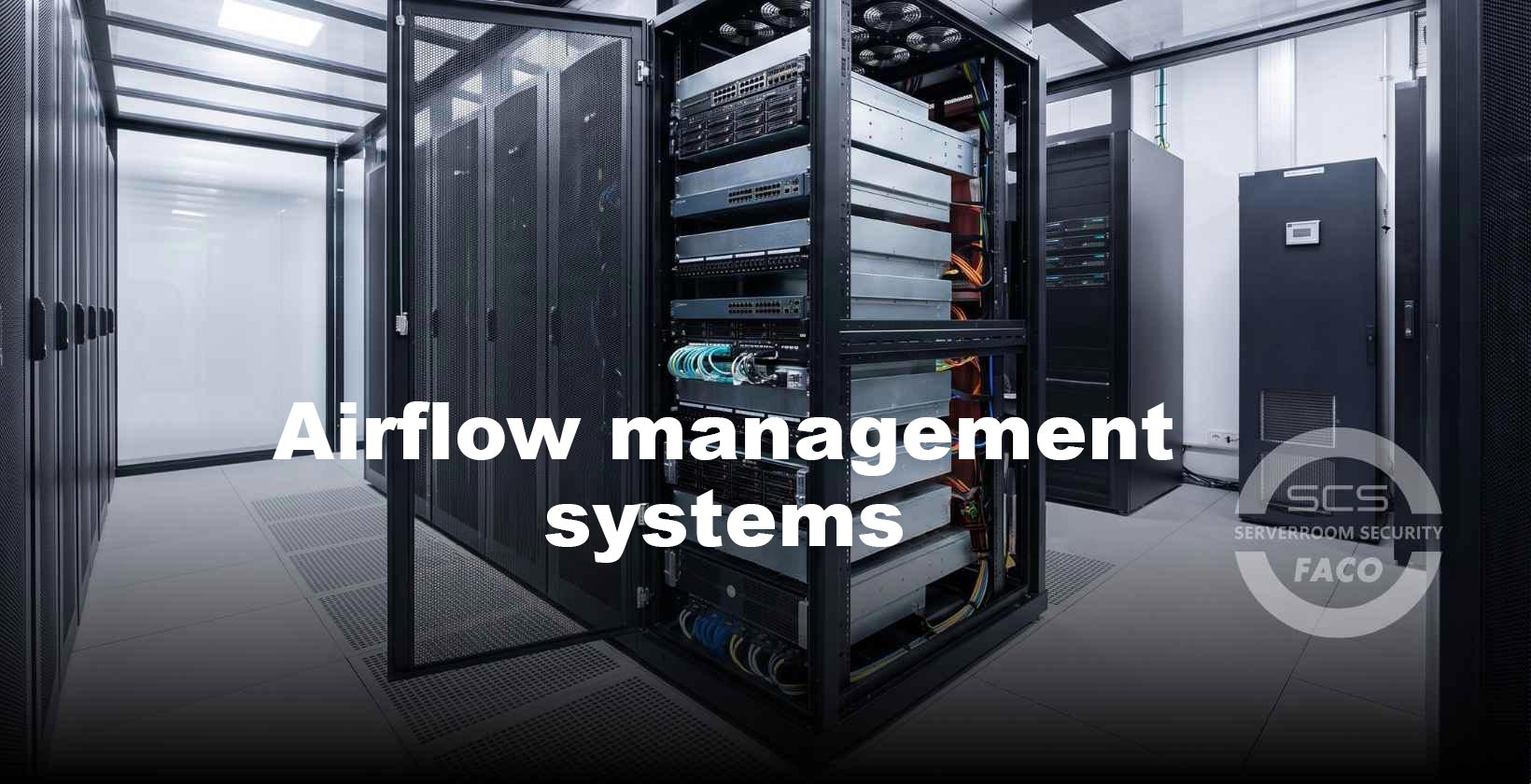
Airflow management systems | SCS FACO
Airflow management systems are metal elements specifically designed for airflow, supporting HVAC systems in data centers in regulating the required indoor climate as efficiently and consistently as possible.