
 18May
Server power consumption: average, costs & savings
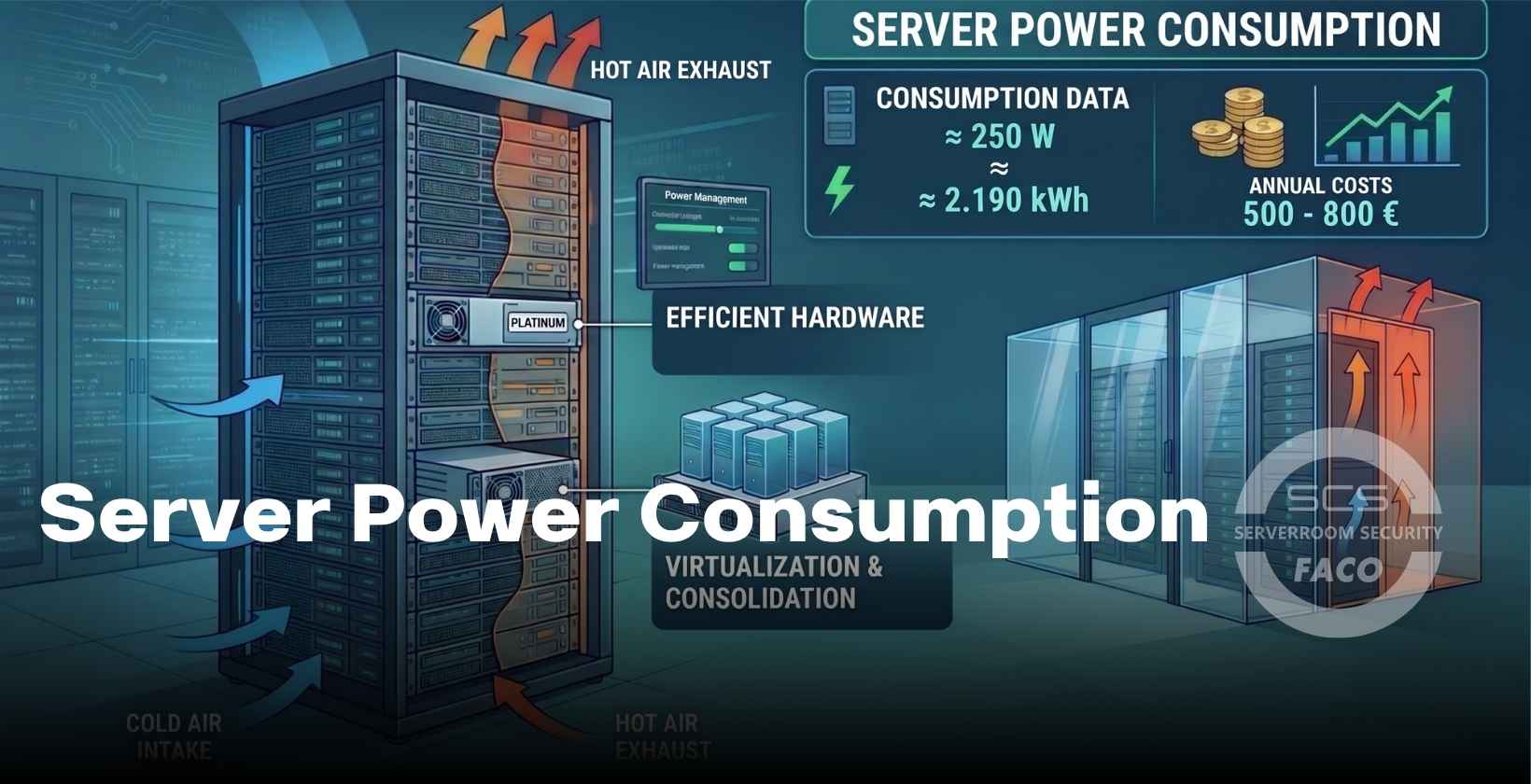
Server power consumption is a crucial cost and sustainability factor for many companies because servers typically run around the clock. As a rough guideline, a typical server in continuous operation consumes an average of 250 watts.
Server power consumption depends heavily on the installed hardware, the actual workload, the efficiency of the overall system, and the required cooling.
Server operating costs consist of energy costs, maintenance costs, and costs for accommodation, such as in your own server room or in a colocation environment.
To reduce server power consumption, more efficient cooling concepts such as cold or hot aisle containment, virtualization and server consolidation, as well as energy-efficient hardware and good power management are recommended.
How much electricity does a server consume?
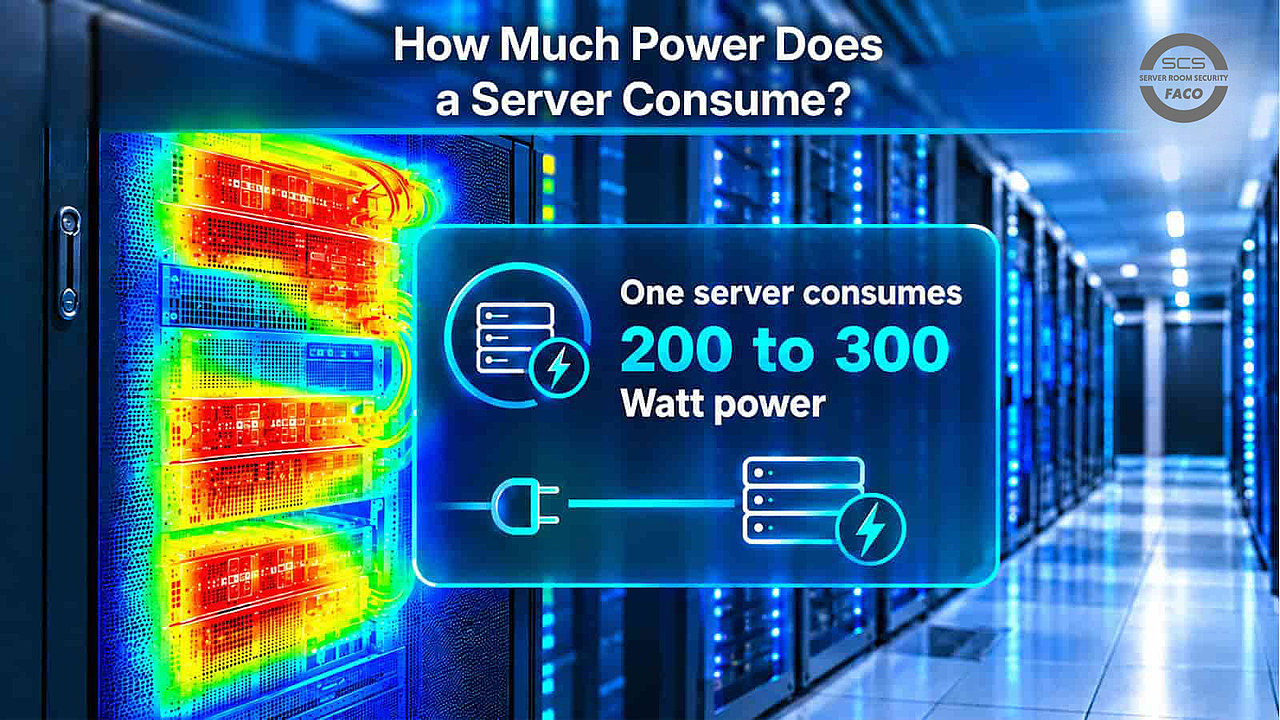
A server consumes approximately 200 to 300 watts during operation.
Single-socket servers typically consume between 150 and 300 watts, depending on their configuration and workload. High-performance, high-end systems, on the other hand, often consume significantly more power, ranging from 500 to 1000 watts.
The actual power consumption of a server is largely determined by its hardware components. A key factor is the number of processors (CPUs, Central Processing Units). In many servers, the CPU is the single largest power consumer. Modern server CPUs often have a TDP (Thermal Design Power) of approximately 150 to 400 watts per socket. A dual-CPU server doubles the power consumption of a comparable single-socket system. A server with two processors typically consumes around 250 to 500 watts, while systems with four processors, depending on the platform and configuration, tend to consume between 500 and 1000 watts.
RAM has a measurable impact on a server's power consumption. Each RAM module requires approximately 2 to 5 watts per stick. With large RAM configurations, this quickly adds up. A server with 1 TB of RAM can potentially consume over 100 watts of power due to the memory alone.
Server power consumption is influenced by factors such as the storage media (HSS and SSD). Traditional hard disk drives (HDDs) typically consume around 6-10 watts per drive, while SSDs are generally more efficient, consuming approximately 2 to 5 watts. This difference becomes more significant with many drives in storage servers or under high I/O load.
Besides the server's specifications, its utilization is crucial for power consumption. Servers are not completely switched off when idle; they still require energy for basic functions and, in particular, for cooling their components. An idle server uses approximately 30 to 50% of its maximum power for cooling and basic functions. Under load, power consumption increases with CPU utilization.
Another factor influencing server power consumption is the efficiency of the power supply. Power supplies with Gold or Platinum certification typically convert over 90% of the input energy into usable power, reducing losses and thus lowering both electricity costs and heat generation. Heat generation is closely related to cooling efficiency.
The more heat a server generates, the more energy is needed to dissipate that heat from the system and the room. Internal fans play a role here, as does the efficiency of the entire data center or server room infrastructure, which is often measured using the PUE (Power Usage Effectiveness) value.
How much does it cost to run a server?
The cost of running a server depends on energy costs, maintenance costs, and the cost of housing the server.
Direct electricity costs for IT are a key component of energy expenses. For example, assuming an average server power consumption of approximately 250 watts in 24/7 operation, this equates to roughly 2,190 kWh per year (0.25 kW x 8,760 hours). With a commercial electricity price of approximately €0.25 to €0.30 per kWh, the pure electricity costs are therefore roughly in the range of €500 to €800 per year, depending on actual consumption, price levels, and the individual load profile.
Depending on the room layout and efficiency, cooling accounts for a significant portion of server energy costs. Server cooling often represents approximately 20-40% of the total energy consumption. This is because the heat generated by the IT equipment must be reliably dissipated to ensure stable operating temperatures and, consequently, availability.
Maintenance costs are a significant factor in operating a server. These include expenses for system administration such as security updates, backup checks, and monitoring, as well as the cost of replacement parts when, for example, fans, power supplies, or hard drives fail. Depending on the criticality of the systems and the required availability, service and spare parts contracts influence the ongoing costs.
The costs for server accommodation must be included in the overall server costs. For in-house server operation, in addition to space and power supply, requirements such as fire protection, UPS (uninterruptible power supply), and physical security often need to be considered. In contrast, colocation data centers typically charge monthly fees for rack space or server bays. Whether colocation or in-house accommodation is more economical depends heavily on the individual setup, scalability, security requirements, and the desired operating model.
How can server power consumption be reduced?
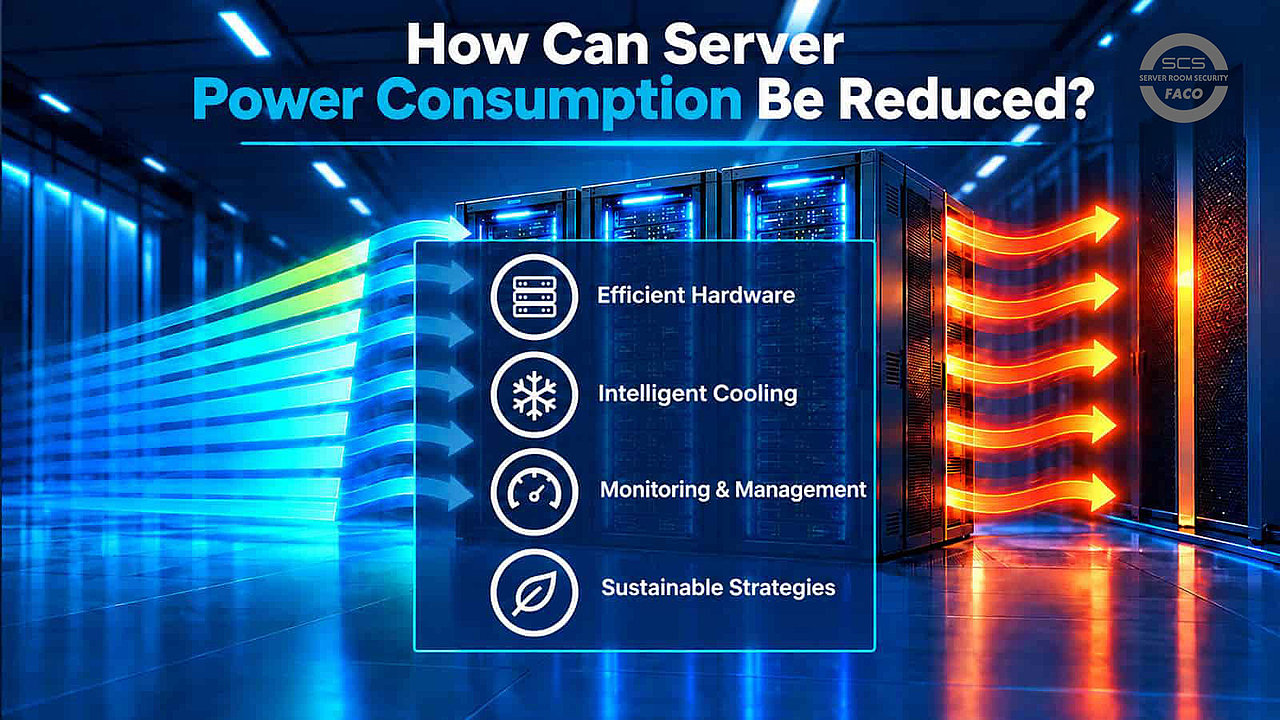
Server power consumption can be reduced by reducing cooling energy consumption, optimizing hardware utilization through virtualization or consolidation, and using energy-efficient IT components.
The key to reducing server power consumption is the interplay of all technical factors. Less waste heat reduces cooling requirements, better airflow lowers the necessary cooling capacity, and higher utilization reduces the number of physical systems that require power and cooling.
Efficient cooling with hot aisle or cold aisle containment
One particularly effective approach to reducing cooling costs is the consistent separation of warm and cold air streams through hot aisle or cold aisle containment.
The purpose of hot aisle and cold aisle containment is to prevent cooled supply air from mixing with warm exhaust air. Any mixing reduces the effectiveness of the cooling and leads to unfavorable temperature distributions in the server room.
In cold aisle containment, the front ends of the server racks face each other, and the aisle between them is enclosed. Cooled air is blown into this cold aisle so that the servers on the intake side receive cool air. The warm exhaust air, on the other hand, remains outside the enclosed area.
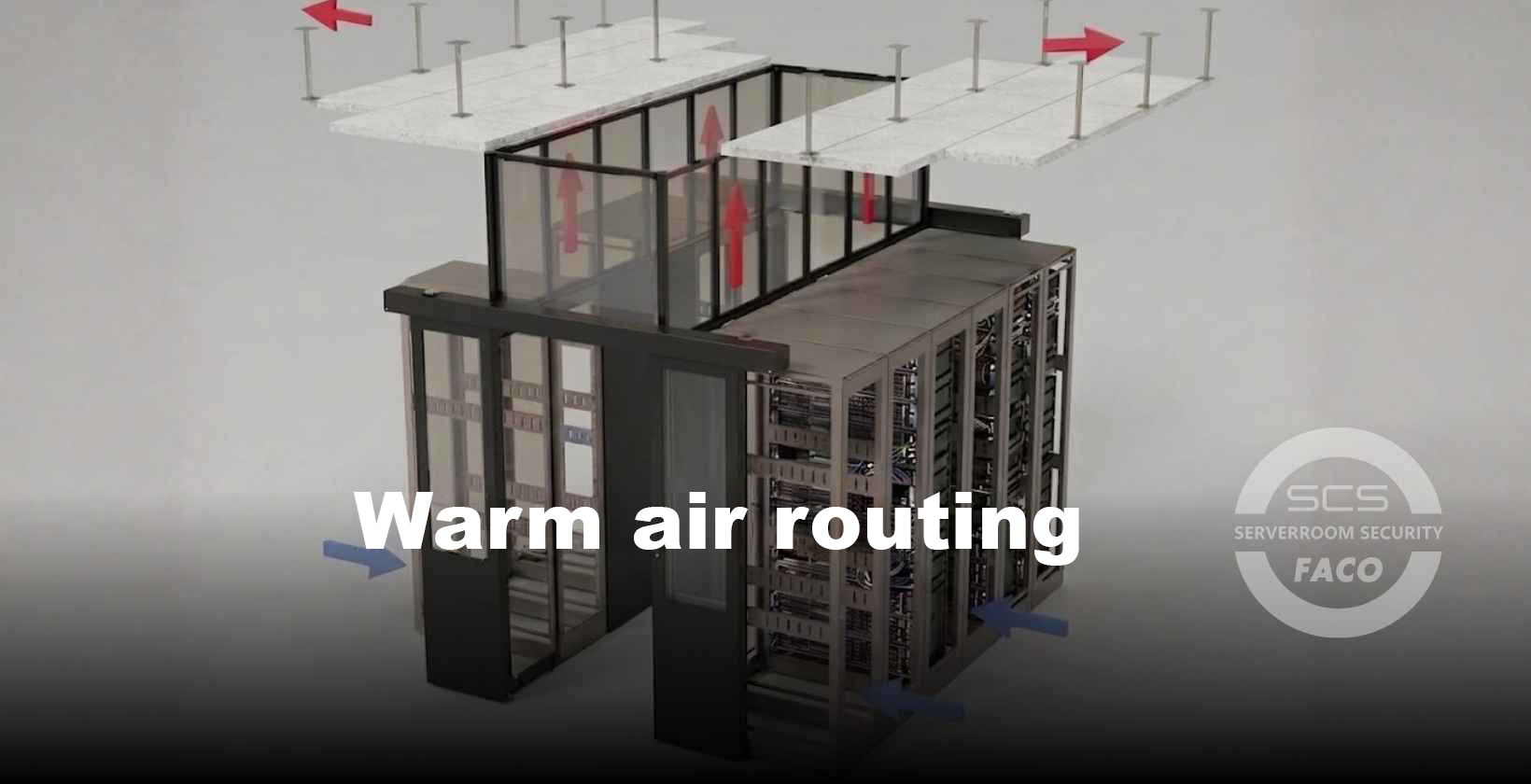
In hot aisle containment, the warm aisle between the rack rears is enclosed. The warm air is collected there and extracted via a HAC chimney system. This allows the warm exhaust air to be kept away from the supply air area in a controlled manner, which increases the efficiency of the airflow and reduces typical hotspots.
For such enclosure concepts, SCS FACO offers high-quality cold and hot aisle containment systems. Our aisle containment systems are modular and manufactured according to customer-specific requirements. Modularity is important because rack rows, room geometries, and access concepts rarely fit perfectly off-the-shelf. A properly implemented containment system improves airflow and helps to reduce the overall energy consumption associated with server operation.
Virtualization and server consolidation
Virtualization and server consolidation often offer potential for reducing server power consumption. In many IT environments, numerous physical servers run with very low utilization, often at only about 10 to 15% capacity. Nevertheless, these systems continuously consume power even when idle and produce waste heat that requires cooling. Server virtualization allows multiple virtual machines (VMs) to be bundled onto powerful physical servers. This reduces the number of physical servers required, which not only reduces direct IT power consumption but also typically lowers cooling requirements and rack space needs.
Server consolidation involves combining workloads and services from multiple underutilized systems to better utilize existing hardware. This reduces the energy consumption of IT systems, especially when old, inefficient systems are replaced by fewer, more modern platforms, or when operational methods are strategically adjusted.
Energy-efficient hardware
Choosing energy-efficient hardware directly impacts the power consumption of the servers.
Using highly efficient power supplies helps reduce server power consumption. Devices with 80 PLUS Gold, Platinum, or Titanium certifications achieve high efficiencies, often exceeding 90%, resulting in less energy being converted into heat. This reduces direct power consumption and the amount of heat that needs to be cooled.
Energy-efficient hardware requires intelligent power management. Modern operating systems and BIOS/firmware features offer energy-saving modes that adjust clock speed, voltage, and power consumption to the actual load. Additionally, power capping is recommended to define maximum power limits, making consumption and heat generation more predictable. The greatest reduction in server power consumption is achieved when efficient components, suitable power supplies, sensible load balancing, and good airflow are considered together.
More
Warm air routing from SCS FACO
Warm air routing is an essential component of data center air conditioning with hot aisle and cold aisle systems. It ensures that the heat generated by servers and other IT components is dissipated in a controlled manner from the immediate rack area.
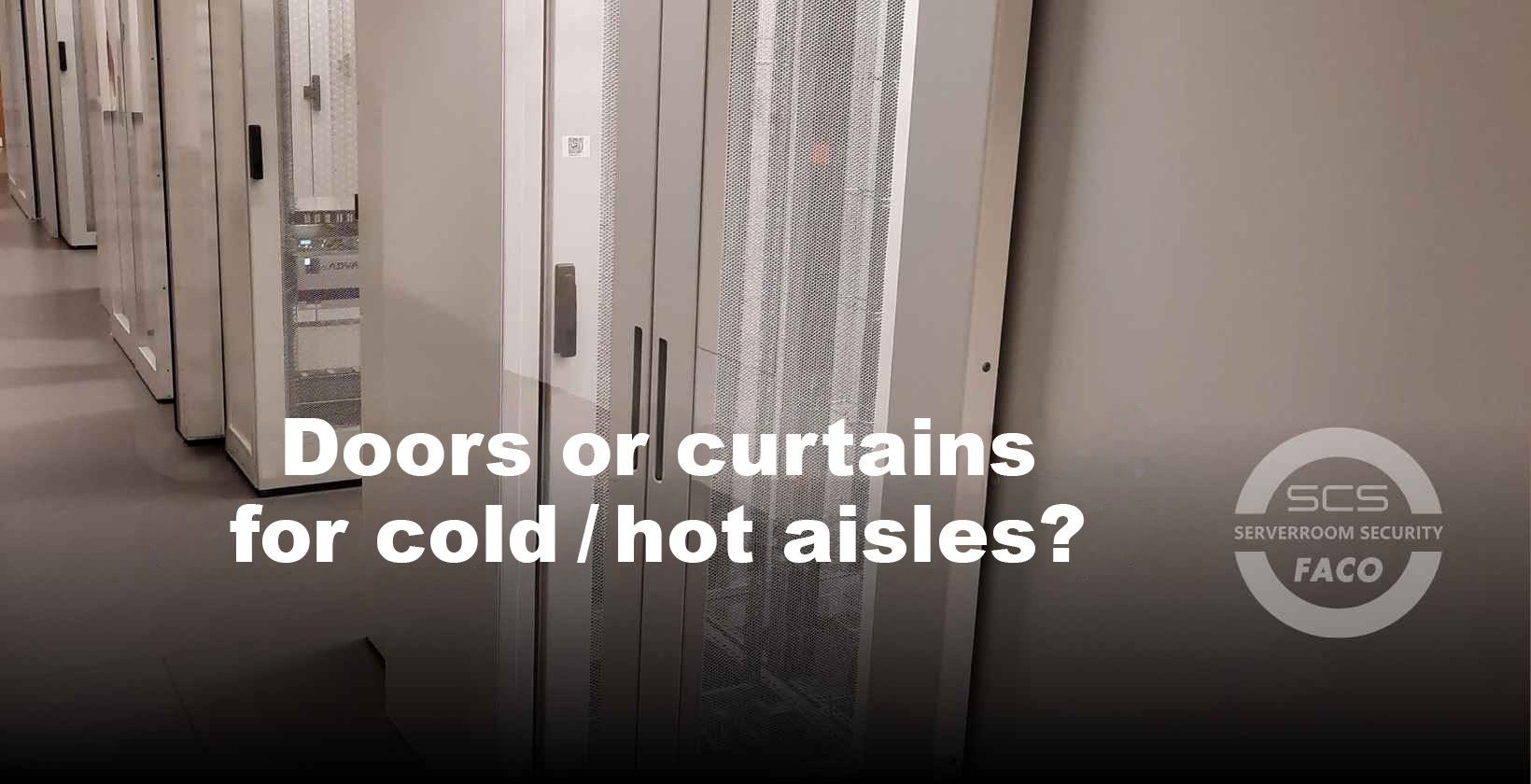
Doors or curtains for cold / hot aisles?
Whether doors or a curtain are more suitable for the cold aisle / hot aisle depends on the individual room conditions and framework within the server room.
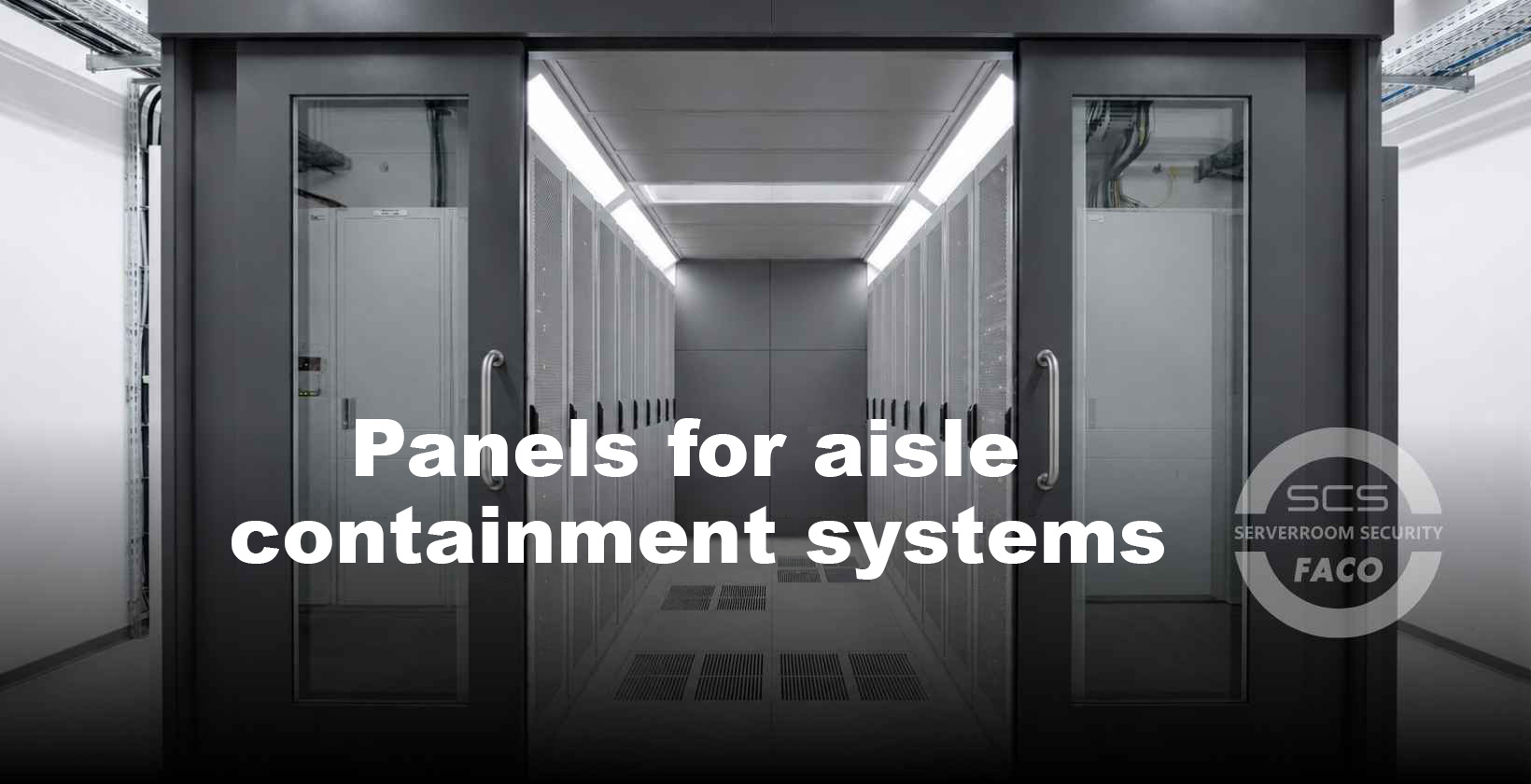
Panels for aisle containment systems from SCS FACO
SCS FACO's aisle containment panels are modular in design and can be individually adapted to existing or planned rack systems.