
 31Mar
Cooling a server room without air conditioning - is it possible and how does it work?
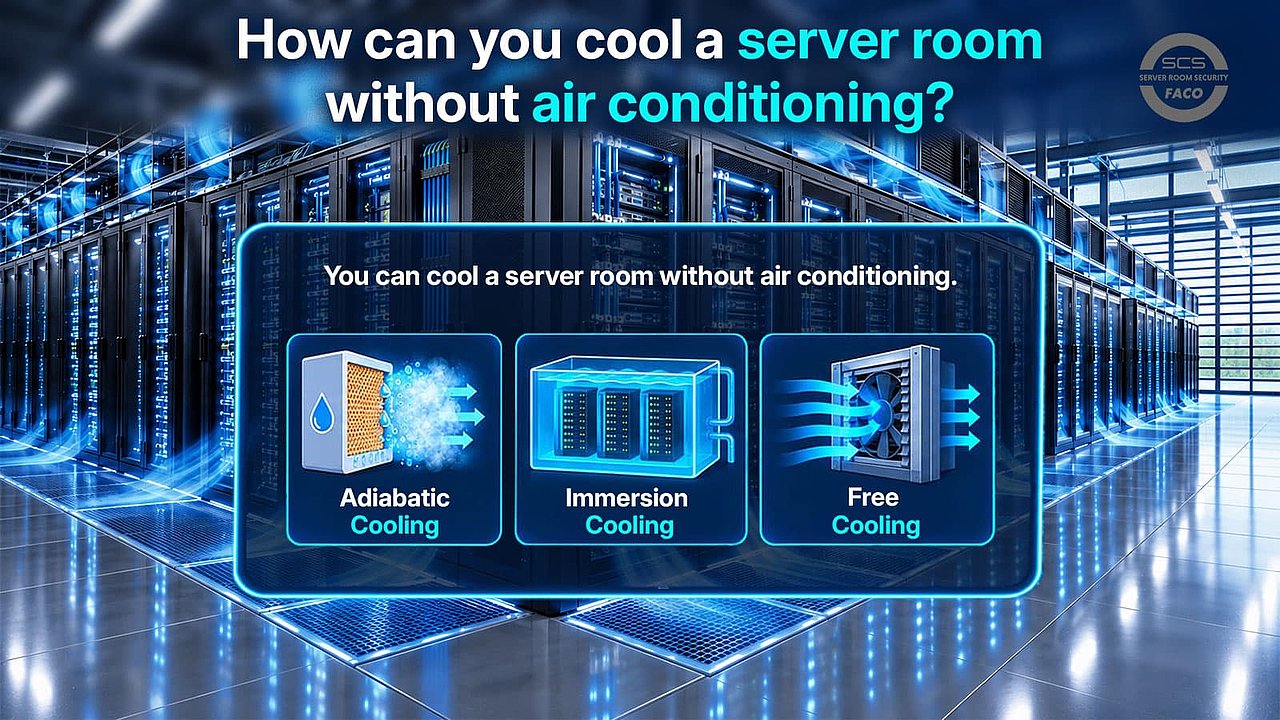
Cooling a server room without air conditioning is possible by using cooling systems such as adiabatic cooling or immersion cooling.
Cooling server rooms is crucial because the IT equipment inside them continuously generates heat. Without cooling, there is a risk of the equipment overheating and being damaged.
The alternative to cooling a server room without air conditioning is cooling it with an air conditioner. Cold aisle or hot aisle cooling systems are suitable for optimizing the cooling performance of server rooms with air conditioning. SCS Faco manufactures and sells high-quality cold aisle and hot aisle cooling systems for optimized cooling performance of existing cooling systems.
How can you cool a server room without air conditioning?
A server room can be cooled without air conditioning by using alternative cooling methods such as adiabatic cooling, immersion cooling, or free cooling. Blowers or fans provide supplementary air circulation within the server room.
An effective addition to the aforementioned cooling measures in the server room are structural measures such as higher ceilings or the creation of special cooling zones.
The following sections explain in detail the most important alternatives for cooling a server room without air conditioning.
Adiabatic cooling
Adiabatic cooling is an efficient method for cooling server rooms without air conditioning. In adiabatic cooling, the evaporative cooling effect of water is used to cool the server room. The natural process of water evaporation provides 95% of the cooling capacity.
Adiabatic cooling creates evaporative cooling by passing outside air through water-soaked pads. The water absorbs the heat energy from the air and evaporates. This physical process lowers the air temperature by up to 15 °C.
The effect of evaporative cooling is limited at high humidity. Adiabatic cooling is most effective in low to medium humidity environments.
The use of adiabatic cooling enables energy savings of up to 80% in server rooms and represents an efficient method for cooling servers.
Immersion cooling
Immersion cooling (also called immersion cooling) is a method for cooling server rooms without air conditioning by immersing the hardware, such as servers or storage devices, in a non-conductive liquid. The liquid directly dissipates the heat emitted by the devices.
Immersion cooling in server rooms comes in two types. In single-phase immersion cooling, all server components are immersed in a non-conductive, dielectric fluid to dissipate heat via a heat exchanger. The coolant remains liquid and is not brought to a boil.
In two-phase immersion cooling, a liquid is used that is brought to a boil by the heat of the equipment. This causes the liquid to evaporate. The vapor rises, condenses on a condenser, and drips back into the liquid reservoir. Both cooling methods increase the efficiency of heat transfer and cool IT equipment in server rooms.
An average server room uses almost 50 percent less energy with immersion cooling than with air cooling alone. This is the conclusion of a study by the University of Groningen, which compared air and immersion cooling.
Immersion cooling systems for server rooms require careful handling of the coolant. Before any repair or replacement, the coolant must be completely drained and the system thoroughly cleaned. Modifications to a server room with immersion cooling are time-consuming.
Free cooling
Free cooling is a method of cooling a server room without air conditioning, using naturally cooled air or water. Under suitable environmental conditions, free cooling is a cost-effective and energy-efficient alternative to electrically powered cooling systems such as air conditioners.
According to the trade journal “IKZ Fachplaner”, the energy saving potential of free cooling is up to 80%.
Free cooling works through heat exchange. Cold air or cold water is used to dissipate heat and achieve a cooling effect. This heat exchange occurs through contact between the warm air and the cooling environment. Apart from the electricity used to power the fans, no other energy is consumed.
Free cooling is divided into direct and indirect free cooling. In direct free cooling, the cooling medium, e.g., air, is directed straight to the components to be cooled – e.g., the servers.
In indirect free cooling, the data center's interior air is cooled with a refrigerant that is cooled by the outside air. Indirect free cooling offers the advantage that humidity and contaminants in the outside air do not pose a risk to the server room.
The efficiency of free cooling in the server room depends on the ambient conditions. In regions with high temperatures or high humidity, the cooling effect is severely limited. At temperatures below 18°C, cold air is introduced into the server room through open windows or a ventilation system.
At temperatures above 20°C, free cooling increasingly struggles to dissipate heat completely. This is the conclusion of a study by the Swiss Federal Office of Energy and the Zurich University of Applied Sciences. Free cooling is unsuitable for server rooms that require a constant cooling temperature, as it is dependent on the outside temperature.
Blowers and fans
Server rooms can be cooled without air conditioning using blowers and fans. These devices expel the warm air generated by the servers upwards or to the outside. Simultaneously, fans ensure a supply of cooler air into the server room.
Blowers and fans are a simple and cost-effective solution for cooling server rooms. They are suitable for small server rooms with few servers or as a supplement to existing cooling systems. The efficiency and cooling capacity of blowers and fans depend on external factors such as ambient temperature and humidity.
Structural measures
Structural modifications can be considered to cool a server room without air conditioning. For example, higher ceilings help to better dissipate rising warm air and improve airflow within the room. Separate cooling zones can be created to cool specific areas of the server room.
The design of the floor and ceiling plays a crucial role in the cooling of a server room. Raised floors and suspended ceilings facilitate air circulation and support passive cooling. Strategically placed doors and windows are essential to minimize the ingress of warm outside air while simultaneously optimizing conditions for effective cooling through fresh air intake.
Structural measures are a supportive addition to optimize the efficiency of existing cooling systems.
Why is cooling necessary in server rooms?
Cooling in server rooms is essential because, without efficient cooling, the IT equipment inside is at risk of overheating. Overheating can lead to system failures, data loss, and fires. Effective cooling in the server room prevents the equipment from overheating.
System failures, data loss, and fires cause high costs for companies. Depending on the severity, these consequences of overheating can, in the worst case, lead to the company's inability to operate. A cooling system protects against these consequences by keeping the temperature and humidity in the server rooms constantly within an acceptable range.
For optimal operation, server rooms should maintain a temperature of 18 to 27 degrees Celsius. This is the recommendation of the American Society of Heating, Refrigerating and Air-Conditioning Engineers.
The risk of fire in server rooms should not be underestimated, because the IT equipment located there is very sensitive and sometimes made of flammable materials. Therefore, a high-quality cooling system is essential for effective fire protection in server rooms.
Alternatives for cooling a server room without air conditioning
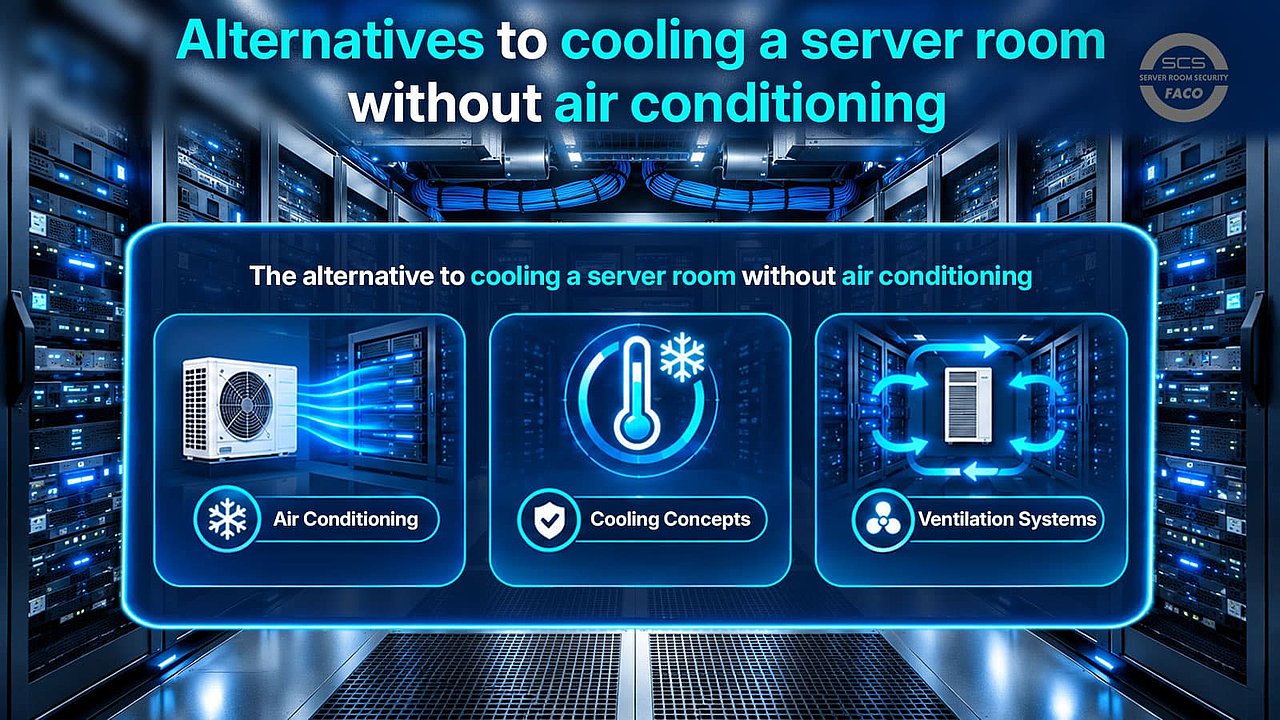
The alternative to cooling a server room without air conditioning is cooling the server room with air conditioning. Air conditioning systems are an effective and reliable way to cool server rooms.
An air conditioning system for the server room can optionally be supplemented with a cold aisle or hot aisle system. Cold aisle and hot aisle systems optimize air circulation in the server room by strictly separating warm and cold air. This makes cooling with the air conditioning system as efficient as possible.
At SCS FACO, we manufacture and sell high-quality cold aisle and hot aisle cooling systems to complement existing cooling systems in server rooms. Our cold aisle and hot aisle cooling systems make a significant contribution to cooling servers and other IT components. In combination with an air conditioning system, cold aisle and hot aisle cooling systems offer an alternative to server room cooling without air conditioning.
More
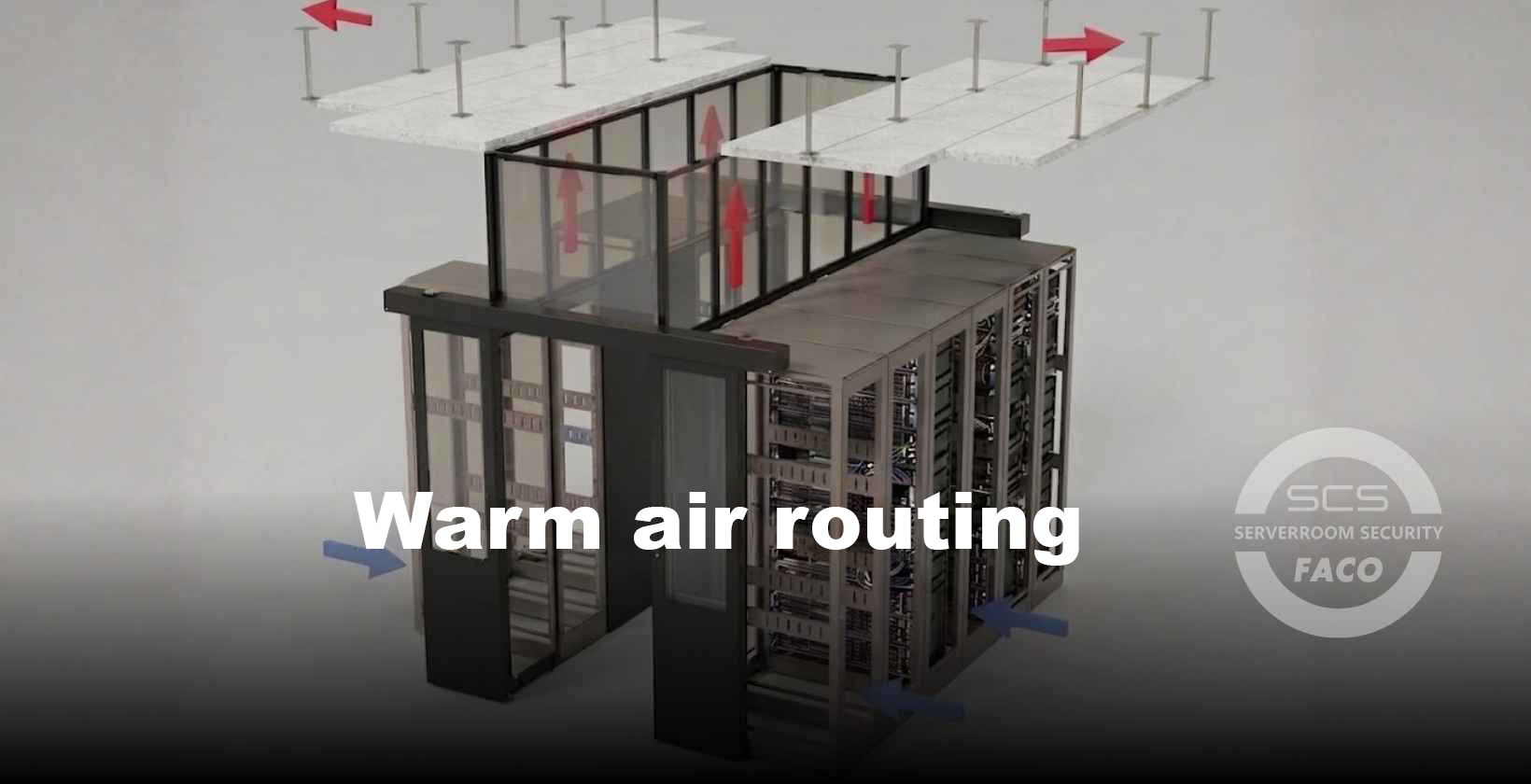
Warm air routing from SCS FACO
Warm air routing is an essential component of data center air conditioning with hot aisle and cold aisle systems. It ensures that the heat generated by servers and other IT components is dissipated in a controlled manner from the immediate rack area.
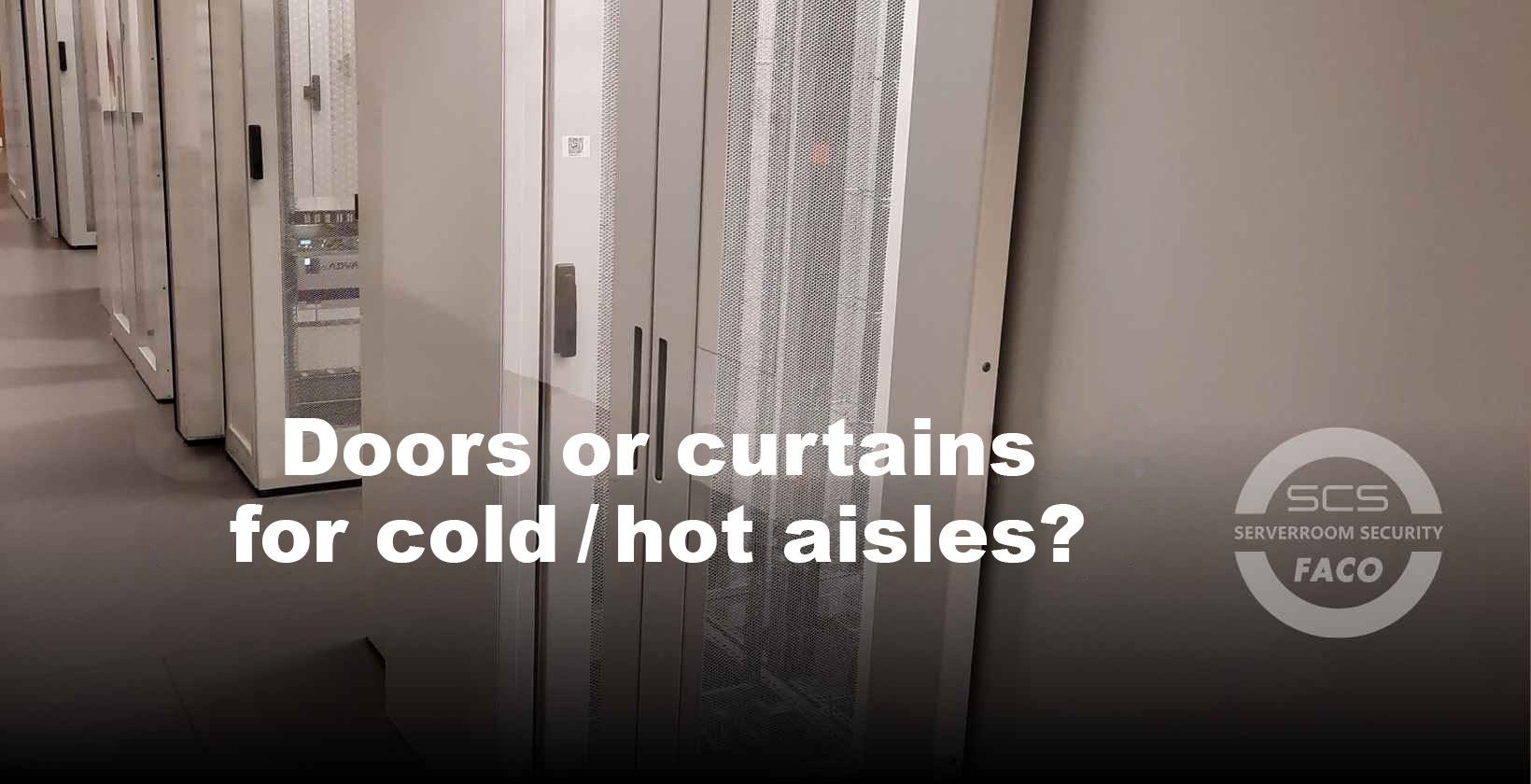
Doors or curtains for cold / hot aisles?
Whether doors or a curtain are more suitable for the cold aisle / hot aisle depends on the individual room conditions and framework within the server room.
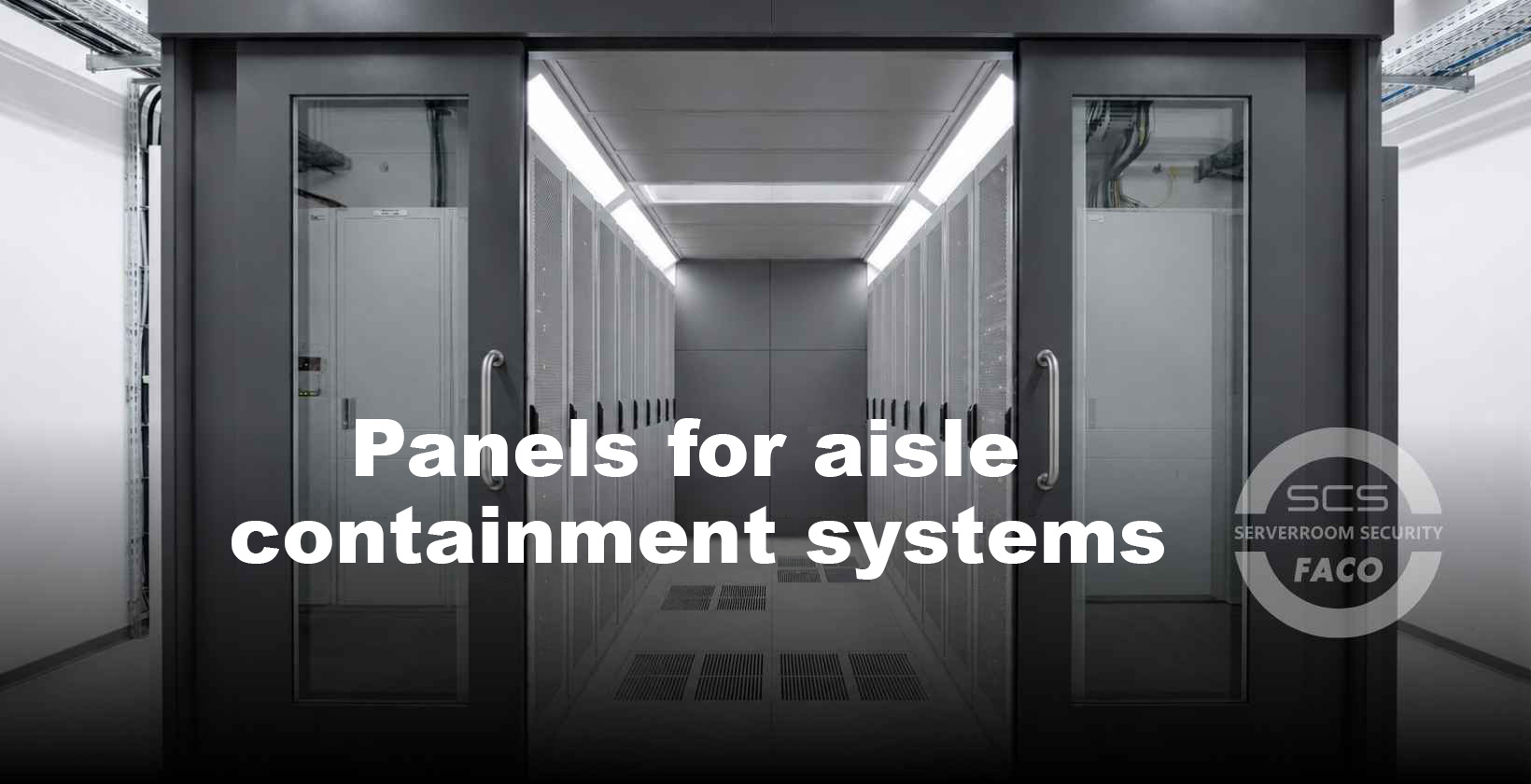
Panels for aisle containment systems from SCS FACO
SCS FACO's aisle containment panels are modular in design and can be individually adapted to existing or planned rack systems.