
 21Jul
21JulAirflow in the data center
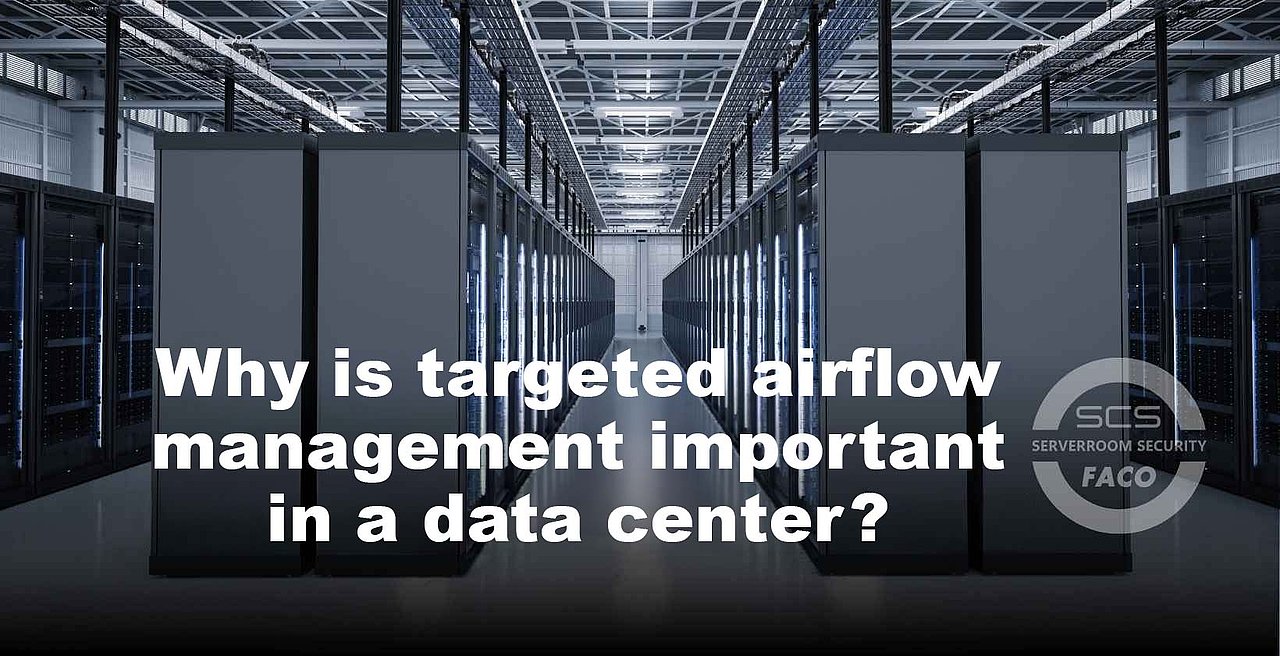
The goal of professional air management in the data center is to supply servers with cold air evenly and reliably, and to consistently and controllably remove the resulting warm air.
Cold and hot aisle containment systems are among the most important components of effective air handling, because they ensure that airflows are directed precisely where they are needed.
Targeted airflow is important in data centers because it minimizes several physical risks and reduces operating costs. It reduces the risk of overheating, protects against condensation, stabilizes IT performance, and improves energy efficiency.
Efficient airflow in a data center is only possible with strict separation between cold and warm air. Common air distribution systems include in-rack air distribution systems, raised floors, and hot aisle/cold aisle containment.
SCS FACO specializes in aisle containment systems for data centers of all sizes. The individual components are custom-made on CNC-controlled machines, allowing solutions to be precisely tailored to spatial constraints, rack configurations, and access requirements. This precise manufacturing of the containment systems is crucial, as even minor leaks can significantly compromise the desired air separation.
Why is targeted airflow important in the data center?
Targeted airflow in the data center is important because it reduces the risk of overheating and helps to safely manage the heat load of modern server racks.
Targeted airflow management in the data center helps prevent hotspots. Without consistent airflow management, the likelihood of hotspots increases with rising system density, varying workloads, and different generations of equipment. Hotspots occur where insufficient cool air reaches the front of the equipment or where warm exhaust air recirculates back into the cool air area. The worst consequences of inadequate airflow include performance losses due to thermal throttling and unplanned server outages, leading to availability and cost risks.
The airflow system helps protect against condensation and electrostatic discharge (ESD). A relative humidity of approximately 40-60% reduces the risk of ESD and helps prevent condensation. According to ASHRAE guidelines, stable environmental conditions are essential for reliable data center operation. Well-designed airflow supports this stability by minimizing abrupt local temperature and humidity fluctuations, thereby extending the lifespan of sensitive hardware.
Targeted airflow improves IT performance. IT components operate in a more thermally favorable range when cool, stable temperatures below 27°C are maintained. This reduces stress on fans, power supplies, and other components, contributing to reliable operation.
Targeted airflow improves energy efficiency, as cooling accounts for up to 40% of the total energy consumption in data centers. The more consistently warm and cold air are separated, the more efficiently the available cooling capacity is used.
How can efficient airflow be achieved in a data center?
Efficient airflow in the data center is achieved by consistently ensuring strict separation between cold and warm air.
Airflow management prevents the warm exhaust air from the servers from mixing with the cooled supply air. Any mixing increases the temperature of the supply air, reduces the usable temperature difference, and forces the overall system to use more energy to reliably cool the same IT load. Targeted airflow management ensures that cool air is directed to the front of the equipment and warm air is reliably extracted from the exhaust area. Separating the cold and warm air typically results in significant savings in operating costs because the cooling system operates more efficiently and requires less reserve capacity.
Efficient airflow in the data center requires careful planning of air paths, tight sealing of partitions, and consistent reduction of typical leakage points (for example, through blanking panels). Blanking panels close off empty rack units and prevent warm air from flowing towards the server fronts or cold air from escaping uncontrollably to the rear. This requires that the building structure supports the separation, such as through a suitable arrangement of rack rows according to the hot/cold aisle principle and through air guide elements that stabilize the desired airflow direction.
Efficient airflow in data centers can be supported by temperature sensors. Temperature sensors, for example, mounted in floor panels and connected to a control system, make it possible to track temperature profiles in cold and hot areas. The system adjusts the fan speed when excessively low or high temperatures are detected. Such control mechanisms ensure a consistent airflow and help prevent unnecessary overcooling, which in turn positively impacts the overall system efficiency.
What air distribution systems are available for data centers?
Data centers utilize various air distribution systems, such as in-rack air distribution systems, raised floors with fans, and cold aisle and hot aisle containment. These systems are either combined or expanded incrementally depending on the building structure, power density, and operational requirements.
In-rack air distribution systems aim to reduce airflow losses and short circuits within the rack structure. This is achieved through the use of blanking panels. Blanking panels optimize air circulation within the rack by closing off unused rack areas. This prevents warm and cold air from mixing within the rack, directly improving the effectiveness of front-to-back server cooling.
Raised floors are a common air distribution system in data centers. A raised floor creates a cavity above the subfloor, through which cool air is directed to the server racks. This system allows the supply air to be distributed spatially without spreading uncontrollably throughout the entire room. Fans circulate the cooled air within the raised floor and stabilize the supply in areas with higher loads.
The most effective method for separating cold and warm air is the use of cold aisle and hot aisle containment, also known as hot aisle/cold aisle containment. In this system, cold or hot aisles are physically separated from the rest of the server room by doors, panels, and roof elements. The advantage of aisle containment lies in the consistent air separation. Cold air stays where it is needed, and warm air is collected and extracted in a controlled manner, instead of circulating throughout the room and warming the incoming air. This separation of cold and warm air facilitates stable temperature conditions at the equipment front and increases cooling efficiency because mixing air zones are significantly reduced.
Aisle enclosures by SCS FACO
SCS FACO manufactures individually configurable aisle enclosures for data centers of all types and sizes.
The components are individually manufactured on CNC machines, ensuring a precise fit even in complex room geometries, with varying rack heights or special access requirements. The enclosure's design aims for a sealed construction that allows for predictable airflow and reliably enables the strict separation of warm and cold air.
SCS FACO hot aisle containment systems utilize high-quality panels and doors made of powder-coated steel. The HAC roof elements and Exolon viewing windows are designed to completely seal the hot aisle without compromising the necessary visibility and accessibility. The precisely controlled airflow within the tightly constructed containment system ensures that warm air from the hot aisle is extracted via a duct, preventing it from mixing with cold air in adjacent areas. This promotes a stable temperature level at the server inlets and reduces the likelihood of hotspots, which often result from backflow of warm exhaust air.
SCS FACO cold aisle containment systems feature special CAC roof systems and a height increased by 150 mm. This increased height offers a functional advantage because it contributes to a more even air distribution in the cold aisle. As a result, cold air is directed to the servers and does not mix with the warm exhaust air from the hot aisle.
More

Digital transformation at FACO Metalltechnik
Digitization is having an increasing impact on our management and employees. We are adapting our processes to be customer-oriented.

SCS Secure Cage Systems
Planning, production and assembly of security cages for data centers - made in Germany

Digital transformation at FACO Metalltechnik
Digitization is having an increasing impact on our management and employees. We are adapting our processes to be customer-oriented.