
 04Jun
04JunAir conditioning in the data center
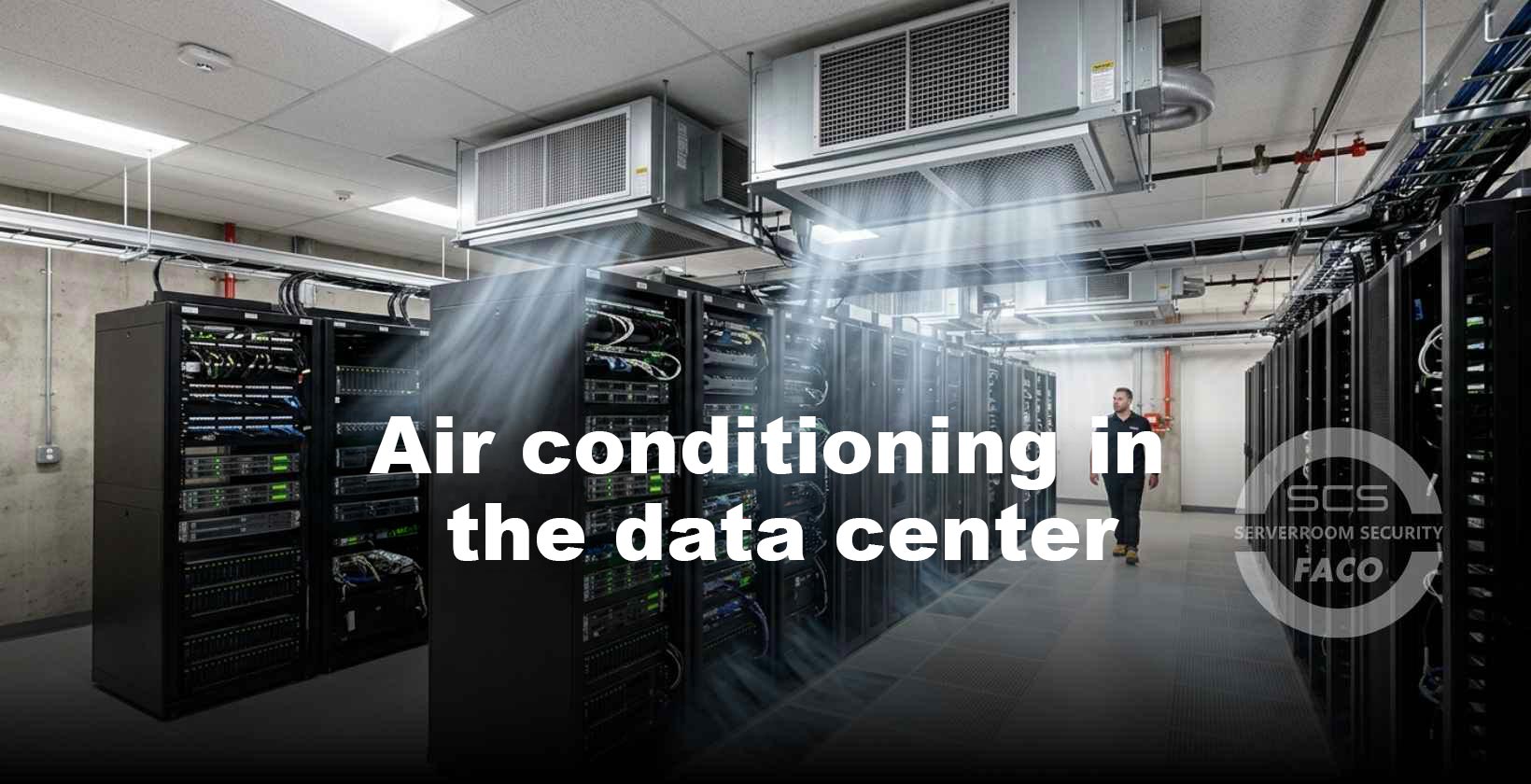
Data center air conditioning encompasses all measures and technologies that ensure a stable, secure, and efficient IT environment by reliably dissipating waste heat and maintaining a defined indoor climate. One example is the high-performance air conditioning systems found in modern data centers, which, depending on their design and IT load, can handle cooling loads of up to 2 kW per square meter.
Air conditioning in the data center directly impacts operational reliability, performance, energy efficiency, and the lifespan of the hardware. Servers, storage, and network components constantly generate heat, making a continuous cooling solution necessary to prevent overheating of the IT equipment and ensure optimal functionality.
Data centers are cooled by various methods, including recirculating air conditioning systems (also known as CRAC/CRAH), adiabatic cooling, free cooling, immersion cooling, and liquid cooling.
When air conditioning in a data center, it is essential to ensure a strict separation of cold and warm air and the targeted removal of warm air. This prevents hotspots and air short circuits, and minimizes unnecessary cooling energy.
SCS FACO manufactures high-quality hot and cold aisle containment systems designed to optimize energy efficiency through clean airflow. On this page, we explain why air conditioning is so important in data centers, describe the most important cooling methods for data centers, and discuss our offerings in this area.
Why is air conditioning so important in the data center?
Air conditioning in the data center is important to create an optimal climate for a functional and secure IT environment with temperatures between 18°C and 27°C and humidity between 40% and 60%.
The data center's air conditioning system helps ensure optimal temperatures between 18 and 27 °C. These temperature ranges are based on established recommendations, such as those described in guidelines from ASHRAE (American Society of Heating, Refrigerating and Air-Conditioning Engineers). The goal is to ensure that the maximum operating temperature of 27 °C is not exceeded and that the IT equipment operates stably and predictably.
Stable temperatures within the optimal range are crucial for operational reliability in the data center. Temperatures below 18°C result in unnecessarily high cooling costs, as additional cooling capacity is required that is not needed for safe operation. Colder air increases relative humidity, thus increasing the risk of condensation. Temperatures above 27°C in the data center increase the risk of overheating for IT hardware, especially in densely packed rack rows or with inadequate airflow.
Effective climate control in the data center helps maintain a stable humidity level between 40% and 60%. If the relative humidity falls below 40%, the risk of electrostatic discharge (ESD) increases. In the worst case, ESD can lead to permanent damage to components and unstable behavior of IT systems. Humidity levels above 60% promote corrosion and mold growth and increase the risk of short circuits.
Air conditioning in the data center is crucial for operational reliability. Constant temperatures achieved through precise air conditioning minimize the risk of fire posed by overheated power supplies and other IT components.
The climate control in the data center affects the performance of IT equipment. CPUs and GPUs age physically faster at consistently high temperatures above 27°C and are more susceptible to damage. Excessively high temperatures lead to thermal throttling, an automatic reduction in performance that directly results in efficiency losses.
Properly implemented data center cooling helps maximize the lifespan of IT components. Adequate cooling prevents hardware from constantly operating near its thermal limits.
Data center air conditioning contributes to optimal energy efficiency of IT equipment and reduces operating costs. With proper cooling, IT equipment operates optimally even at moderate fan speeds. This reduces energy consumption and minimizes noise. Therefore, selecting a suitable cooling method and ensuring precise airflow are crucial for achieving high overall efficiency.
How is a data center cooled?
A data center is cooled via air recirculation systems, for example recirculating air conditioning units or cooling units (CRAC/CRAH), as well as liquid cooling for the hardware.
Heat dissipation in data centers is often achieved using recirculating air conditioning or cooling units (CRAC/CRAH). Air is circulated within the room, cooled, and then delivered to the IT systems to ensure a reliable supply of cool air. With increasing rack densities, liquid-based cooling solutions are gaining importance because liquids transport heat more efficiently than air, thus enabling higher power densities.
In the following sections, we describe the most important cooling methods for data centers.
Free Cooling
Free external cooling uses cool outside air indirectly via a heat exchanger to cool the circuits circulating in the data center.
The advantage of free cooling is that energy-intensive compressors are partially or completely eliminated at low outside temperatures. This makes free cooling a comparatively environmentally friendly method and particularly attractive in temperate climates where sufficiently low outside air temperatures are frequently available throughout the year. In data centers, free cooling is often integrated in such a way that it covers a larger portion of the annual cooling load depending on the weather conditions, with mechanical cooling only being activated when needed.
CRAC/CRAH Cooling Equipment
Recirculating air cooling units are internationally often referred to as CRAC or CRAH and are a common cooling method for data centers.
CRAC (Computer Room Air Conditioner) units function like conventional air conditioners with a compressor and refrigerant, generating cooling directly within the unit. CRAH (Computer Room Air Handler) units typically use chilled water as the medium and transfer the cooling to the air via heat exchangers. In data centers, these cooling units are often positioned to facilitate effective air circulation, for example, in raised floors or along walls.
Liquid cooling (Direct-to-Chip)
In liquid cooling (Direct-to-Chip), water-cooled heat sinks are mounted directly onto IT components such as CPUs or GPUs.
Since liquids dissipate heat much more efficiently than air, higher power densities can be achieved with liquid cooling. Liquid cooling is particularly suitable for high-performance computing (HPC) and highly compressed AI workloads. The waste heat is absorbed directly at its source. This can potentially reduce the requirements for air cooling in the room.
Immersion cooling
In immersion cooling, all the hardware is immersed in a special, electrically non-conductive liquid.
The fluid absorbs the waste heat directly from the IT components, enabling highly efficient heat transfer. Immersion cooling is particularly effective under extremely high heat loads due to this efficient heat transfer. One disadvantage of immersion cooling is that it requires careful system and operational planning. This is because it significantly alters the design and maintenance processes compared to conventional air cooling.
Adiabatic cooling (evaporative cooling)
Adiabatic cooling, also known as evaporative cooling, takes advantage of the physical phenomenon whereby heat is removed during the evaporation of water, thereby cooling the air.
In adiabatic cooling, water is sprayed into the exhaust air stream or passed over evaporation mats, thus cooling the air before it reaches the IT equipment. Adiabatic cooling is often used as a supplement to free cooling to extend the duration of efficient operating conditions and further reduce mechanical cooling, provided the circumstances allow.
How does the climate control system work in a data center?
The climate control system in a data center functions through a combination of cooling, air distribution and heat exchange using air conditioning systems, supplemented by free external cooling and hot and cold aisle containment.
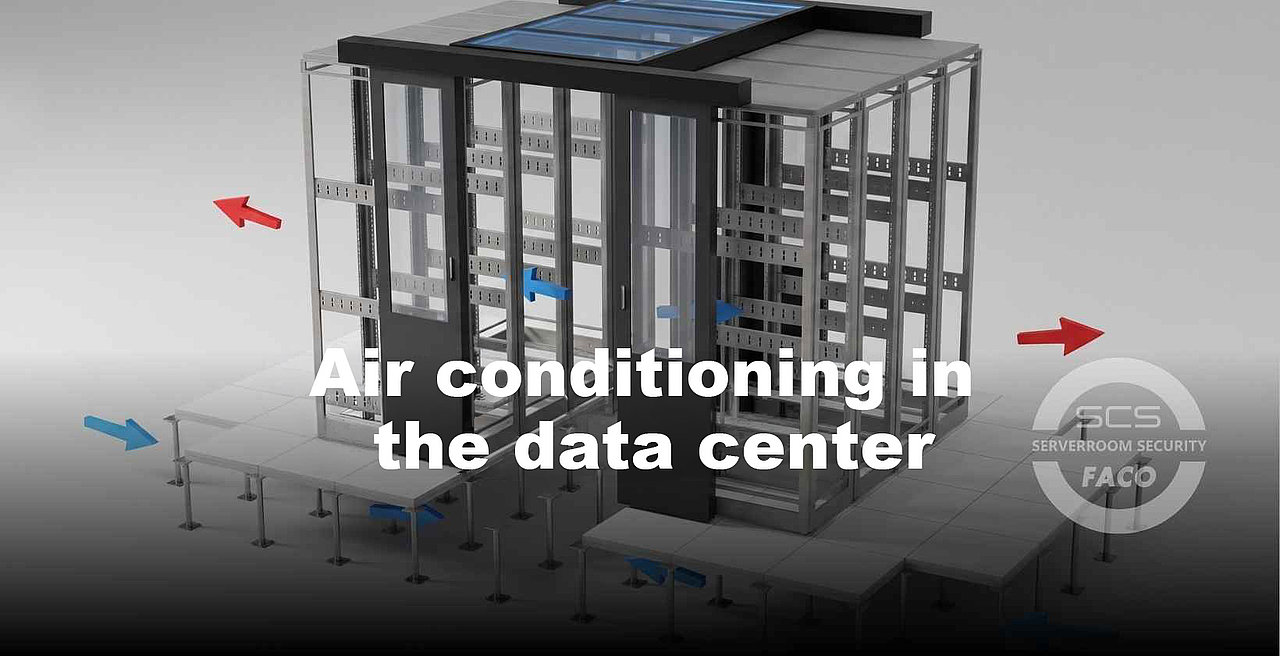
Cold and hot aisle containment systems are used for air distribution in the data center. In the cold aisle, the rack fronts face each other. Cooled air is introduced into the cold aisle via the raised floor or suitable supply air ducts. The aisle between the rack fronts is contained to direct the cool supply air precisely to the server air intakes. In the hot aisle, the rack backs face each other. The resulting waste heat is dissipated via the hot aisle into the raised ceiling. The physical barrier between the cold supply air and the warm exhaust air contributes to more effective climate control in the data center.
Heat exchange in data centers is typically achieved via air conditioning systems. Warm exhaust air is drawn in by CRAC/CRAH units, cooled within the unit via a heat exchanger, and then blown back into the cold area as cooled air.
Heat is dissipated to the outside via a pipe system. The heat from the air is transferred either to a refrigerant (in compressor-based systems) or to chilled water (in water-based systems). The heated medium is then conveyed via pipes to outdoor units, for example, on the roof. There, the heat is released into the outside air. Compressors are electrically powered. In free cooling systems, the cool outside air is used to cool the refrigerant and reduce the need for active cooling.
What should you pay attention to when it comes to air conditioning in a data center?
When it comes to air conditioning in the data center, you should pay attention to an effective separation between cold and warm air through targeted airflow and monitoring.
The consistent separation of cold and hot zones prevents air short circuits. Air short circuits occur when either the cold air escapes unused or the warm exhaust air is drawn back in by the servers. An air short circuit leads to hotspots and forces cooling systems to expend more energy to maintain a stable temperature. Enclosures support targeted airflow, stabilize temperature profiles, and thus improve the efficiency of air conditioning units because the cooling is applied precisely where it is needed.
Monitoring is absolutely essential for data center climate control. It's necessary to detect deviations in the operation of the IT infrastructure early on. Sensors are used in or on racks to identify hotspots before they lead to outages or performance issues. A commonly used indicator is monitoring the delta T, the temperature difference between the supply and return air, or between the supply and exhaust air. A low delta T of less than 10 °C indicates that the airflow or air volume is not optimal, for example, because warm and cold air are mixing or there is excessive bypass airflow.
Optimizing the operating temperature is a crucial aspect of data center climate control. Under optimal conditions, supply air temperatures of up to 27°C are possible in many environments and help reduce cooling energy consumption. Every degree the target temperature is raised saves approximately 2 to 4% on cooling energy. This allows free cooling to be used for a longer period of the year, as the temperature difference compared to the outside air is more frequently sufficient.
Humidity management is crucial for data center air conditioning. Air that is too humid (> 60% relative humidity) increases the risk of condensation. Monitoring the dew point helps prevent condensation. Conversely, air that is consistently too dry (< 40% relative humidity) increases the risk of electrostatic discharge. Humidity sensors support effective monitoring within the data center. A stable balance of temperature, airflow, and humidity is the foundation for robust and efficient data center cooling.
Air distribution systems for data centers from SCS FACO
SCS FACO offers adaptable air handling systems in the form of cold and hot aisle containments that can be individually adapted to the respective data center.
SCS FACO airflow systems support stable temperatures and more efficient air conditioning in the data center, especially in data center environments with increasing power densities that require precise airflow management.
Our air distribution systems for data centers ensure controlled airflow, preventing the mixing of cold and warm air and maximizing the efficiency of available cooling capacity. A well-designed enclosure reduces typical climate control problems such as hotspots and bypass air, promotes more uniform temperature distribution, and creates clearly defined zones where supply and exhaust air are routed separately. Because cooling technology and airflow systems work together more effectively, and the data center's climate control system is less reliant on counteracting adverse airflow effects, the data center's energy efficiency can be significantly improved.
SCS FACO cold aisle containment systems are implemented using CAC roof systems, including transparent roof elements made of Exolon. The modular design allows the solution to be flexibly adapted to individual data center requirements, such as changing rack layouts, access situations, or structural constraints. The goal is to retain cold air in the cold aisle and direct it precisely to the servers, ensuring uniform air distribution and reducing the formation of hotspots.
SCS FACO hot aisle containment systems are constructed using HAC chimney technology and are modularly designed to fit common server rack systems. The complete containment of the hot aisle ensures that the warm exhaust air is extracted in a controlled manner, preventing it from mixing with the cold air. This promotes clear thermal separation within the room and facilitates the reliable routing of warm air to the air conditioning unit return lines.
More

Digital transformation at FACO Metalltechnik
Digitization is having an increasing impact on our management and employees. We are adapting our processes to be customer-oriented.

SCS Secure Cage Systems
Planning, production and assembly of security cages for data centers - made in Germany

Digital transformation at FACO Metalltechnik
Digitization is having an increasing impact on our management and employees. We are adapting our processes to be customer-oriented.